



Skip to content

Recent Posts

  • Norse Mythology Slots: How Viking Legends Shape Gameplay
  • Virtual Credit Systems in Free Slot Modes: How Demo Balances Work
  • Classic Fruit Slots and the Symbols That Never Get Old
  • RTP Configuration: Why the Same Slot Can Have Different Returns
  • NetEnt Slots Guide: Classic Mechanics and New Ideas

Most Used Categories

  • Jackpot Slots (4)
  • Slot Guides (4)
  • Free Slots (4)
  • Mobile Slots (3)
  • Megaways Slots (3)
  • Slot Providers (2)
  • Slot Features (2)
  • Slot Reviews (2)
  • High-RTP Slots (2)
  • Slot Themes (2)
Skip to content
YukonBlondeStream.com

YukonBlondeStream.com

Subscribe
  • Free Slots
  • High-RTP
  • Jackpot Slots
  • Megaways Slots
  • Mobile Slots
  • Slot Guides
Modern Slot Game Mechanics: How Touch Interfaces Change Play
Mobile Slots

Modern Slot Game Mechanics: How Touch Interfaces Change Play

Javier Domínguez07/29/202608/13/2026
Need an App to Play Mobile Slots? Browser Gaming Explained
Mobile Slots

Need an App to Play Mobile Slots? Browser Gaming Explained

Javier Domínguez07/26/202608/05/2026
Mobile Slots vs Desktop Slots: Speed, Screen, and Controls
Mobile Slots

Mobile Slots vs Desktop Slots: Speed, Screen, and Controls

Javier Domínguez07/22/202608/05/2026
Norse Mythology Slots: How Viking Legends Shape Gameplay

Norse Mythology Slots: How Viking Legends Shape Gameplay

Javier Domínguez08/28/202608/05/2026

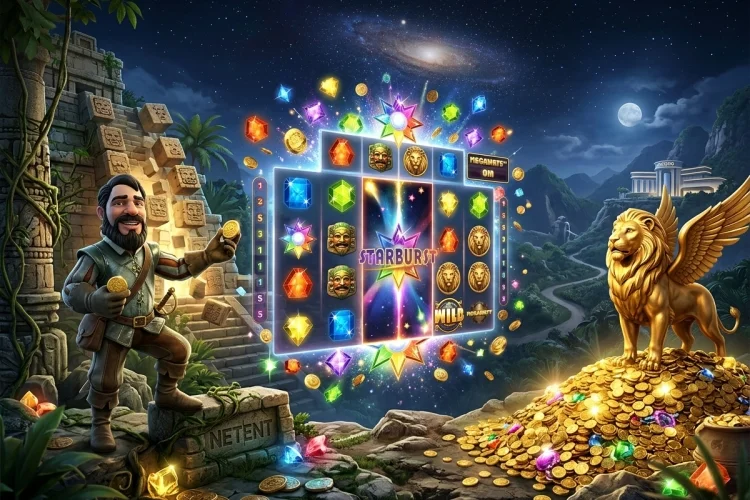
Norse-themed slots rarely stay quiet for long. Lightning strikes the reels, gods activate their powers, symbols collapse from the grid, and warriors travel toward Asgard or Valhalla.

These effects are not chosen only because they look exciting. Norse Mythology Slots offer developers a collection of stories that naturally fit modern game mechanics.

Thor can add wilds with his hammer, Loki can reveal mystery symbols, Freya can upgrade prizes, and Odin can control a progression meter.

Ragnarök can become a free-spin finale, while the nine worlds provide settings for levels or expanding grids. Here is how those legends commonly shape the actual gameplay.

Cascading Grids Represent Continuing Battles

Cascading or tumbling mechanics remove winning symbols and replace them with new ones. The sequence continues when another combination forms.

This system fits a battle theme because each cascade feels like another stage of the same attack. Viking Runecraft uses a 7×7 grid with connected symbols, god powers, and progression toward larger features.

Rather than presenting isolated spins, the grid creates momentum. One successful result may lead immediately to another without resetting the entire scene.

Gods Become Feature Modifiers

A Norse god is often more than a high-value symbol. Each character may add wilds in a different shape, remove selected icons, transform symbols, or increase a multiplier.

Viking Runecraft: Apocalypse gives Heimdall diagonal wild pairs, Freya horizontal or vertical pairs, Thor several randomly placed wilds, and Odin connected wild formations. The chosen result appears through the Gift of the Gods feature.

This gives the theme a practical purpose. Players can connect a character’s appearance with a specific change on the grid.

Megaways Creates Changing Battlefields

Megaways games use changing reel heights, producing a different number of potential winning ways from one round to the next.

Fury of Odin Megaways runs across six reels and can generate up to 117,649 winning ways. Its Norse setting surrounds that changing structure with gods, warriors, and the journey toward Valhalla.

The changing reels make the screen feel unstable and unpredictable, which suits a story built around conflict. However, the number of ways does not tell you how likely a win is or guarantee a stronger result.

Mystery Symbols Match Loki’s Character

Mystery symbols initially appear identical before revealing another symbol type. They can create large groups when several mystery icons reveal the same image.

Loki’s Fortune uses this mechanic as part of its mischievous theme. Its dynamic payways may expand substantially, while Loki acts as the wild symbol and reacts visually beside the grid.

This is an example of theme and mechanics working together. Random transformation feels more appropriate for Loki than it would for a character known for stability or protection.

Free Spins Often Tell a Short Story

A free-spin round may represent a journey, wedding, battle, or defence of Asgard. Characters can move across the reels or become stronger as the feature continues.

In Freya’s Wedding, Thor begins on the final reel as a stacked wild and moves left during the bonus. The movement reflects the chaos of the story while changing the number of positions affected by the character.

The Faces of Freya uses another approach, allowing different free-spin modes based on love, war, sorcery, and Folkvang. Each mode applies its own upgrades or multipliers.

Expanding Reels Suggest Growing Power

Some games begin with a compact screen and unlock additional rows as the bonus progresses. This creates a visible sense of increasing strength.

Riches of Midgard: Land and Expand begins with a 3×3 structure and uses Hot Spot reels to trigger respins. During free spins, the regular reels can grow to seven rows, unlocking up to 29 fixed paylines.

The game combines a traditional three-reel appearance with a modern expanding format, showing that Viking themes are not limited to large grid slots.

Theme Does Not Determine the Mathematics

Two Norse games can feature the same gods but have different reel systems, RTP figures, volatility levels, and maximum payouts.

Riches of Midgard officially lists a 96.03% RTP and a maximum payout of 1,200 times the stake. Fury of Odin Megaways uses a completely different six-reel structure.

The presence of Thor or Odin does not make one game mathematically similar to another. Every title needs to be checked separately.

Norse Mythology Slots turn legendary stories into practical game mechanics. Cascades resemble continuing battles, Megaways creates changing battlefields, Loki controls mystery symbols, and god characters add wilds or upgrades.

Free spins may recreate a journey through Asgard, while expanding reels visually represent increasing power. These connections can make complex features easier to understand, but theme alone does not explain the game’s mathematics.

Read the rules, RTP, volatility information, and feature conditions for the exact title. Use a free demo to compare several designs and see which one combines its mythology with the clearest and most enjoyable gameplay.

Virtual Credit Systems in Free Slot Modes: How Demo Balances Work

Virtual Credit Systems in Free Slot Modes: How Demo Balances Work

Javier Domínguez08/25/202608/13/2026

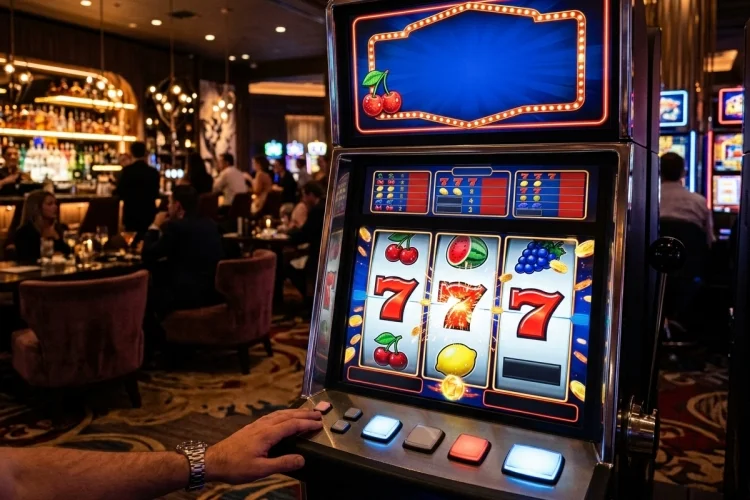
Open a slot in demo mode and you will often see something that looks remarkably similar to a real-money balance. Perhaps the screen starts with 10,000 credits, a spin costs 10 credits, and a winning combination adds 150 back to the total. The experience feels familiar, but no actual money is moving.

That illusion is created through Virtual Credit Systems in Free Slot Modes.

These systems provide an internal accounting layer that lets the game simulate wagering, payouts, bonus prizes, and balance changes without transferring money or anything of monetary value. Great Britain’s Gambling Commission defines play-for-free as a demonstration of a real-money game where the customer neither stakes nor wins money or money’s worth.

The interesting part is how developers make those fictional credits behave like a realistic game balance while keeping them completely seperate from real transactions.

Virtual Credits Are Basically a Simulation Ledger

The easiest way to understand virtual credits is to think of them as numbers in a temporary ledger.

A demo session might begin with:

Starting balance: 10,000 credits

If the selected simulated stake is 20 credits, pressing spin changes the balance to:

10,000 − 20 = 9,980

Suppose the game then awards 75 credits.

The system performs another simple operation:

9,980 + 75 = 10,055

No banking transaction occurs. The game is simply updating an internal state used to reproduce the visible flow of wagering.

This distinction is fundamental to free play. UK Gambling Commission terminology specifically separates play-for-free from gambling for real money or money’s worth.

The balance looks financial because that makes the demo easier to understand, but its value exists only inside the demonstration enviroment.

The Credit Balance Usually Has Its Own State

From a software-design perspective, one common implementation is to keep the demo balance as a dedicated state variable.

Conceptually, the system might track values such as:

demoBalance = 10,000
selectedStake = 20
lastWin = 75

When a spin starts, the simulated stake is deducted. After the result has been evaluated, the virtual award is credited back.

This design mirrors the visible transaction cycle of a paid game without connecting the demo session to a customer’s withdrawable wallet.

Regulatory definitions support this separation. In Great Britain, the free version represents a real-money game but contains no actual stake or prize of monetary value.

The precise software architecture varies by provider, so this should be understood as a common conceptual model rather than a universal code structure.

What matters is that fictional credits remain fictional.

Bet Controls Still Need Realistic Relationships

A free balance would not be very useful if the stake system behaved completely differently from the real version.

Imagine the paid game supports stakes from $0.20 to $20, but its demo suddenly allows players to wager the equivalent of 100,000 units per spin while using different paytable logic.

That would provide a poor representation of the real product.

Great Britain’s RTS 6 requires corresponding free and paid games on the same facility to implement the same game rules and accurately represent both winning likelihood and prize distribution. The guidance specifically says that virtual-cash payouts in free play should correspond with the play-for-money game.

So while the units do not carry actual monetary value, their relationships should remain meaningful.

If a simulated 10-credit stake generates a 50× prize, the fictional balance should normally receive the equivalent 500-credit payout according to the game’s actual rules.

That consistancy makes free play useful for learning the paytable.

Virtual Payouts Reuse the Game’s Reward Logic

A well-designed demo does not need a completely unrelated prize engine.

Instead, the game can evaluate outcomes using the applicable mathematical rules and then route the result into a virtual balance rather than a real-money wallet.

Suppose a spin produces:

Stake: 5 virtual credits
Paytable result: 12× stake

The credit engine calculates:

5 × 12 = 60 virtual credits

The fictional balance rises by 60.

Great Britain’s free-play rules require prize distribution to accurately represent the corresponding money game. Malta’s Gaming Authority also states that the RTP percentage of demo games must be the same as the RTP configured for the real-money game.

That means developers cannot simply make demo winnings artificially generous while presenting the mode as a representative version of the paid game in those regulated contexts.

Individual results remain random, but the model behind them should be representative.

Bonus Features Need Their Own Virtual Accounting

The balance system becomes more interesting when a slot contains free spins, multipliers, jackpots, or cascading wins.

Imagine a bonus begins after a simulated 10-credit wager.

The feature awards eight free spins. During the bonus, the player should not normally see another simulated base-game stake deducted for each awarded free spin if the rules say those rounds are free.

Instead, the system tracks the feature state while accumulating its virtual prizes.

A simplified structure might look like:

Bonus starting balance: 8,500 credits

Free-spin win total: 1,250 credits

Balance after feature: 9,750 credits

The accounting must reflect the actual rules shown to the user. RTS 6 requires free games to implement the same game rules as the corresponding paid games.

So developers need to test not only the main balance but also retriggers, multipliers, accumulated bonus wins, and the transfer of those simluated prizes back into the displayed credit total.

What Happens When the Virtual Balance Reaches Zero?

Because virtual credits have no cash value, developers need some way to prevent a demo from becoming permanently unusable.

A common product-design approach is to provide a reset mechanism, automatically replenish demo credits, or start a fresh session with a predefined fictional balance.

The exact behaviour is provider-specific rather than universal.

The important principle is that replenishment should not be confused with real-money transactions. A demo balance can be reset because nothing of monetary value is being created. The UK definition of play-for-free explicitly describes an environment in which no real stake or money’s-worth prize is involved.

A reset also gives developers a useful QA opportunity.

They can check whether the balance returns to its intended default, whether bonus states are cleared correctly, and whether the new session begins without inheriting old feature data.

Those seemingly small details can prevent unusual bugs later.

Demo Credits Should Stay Separate From Accounting Meters

Separation is also important in formal gaming-device standards.

GLI-11 describes free-play mode as participation without a wager and states that free play should accurately represent normal paid-game operation. It also says free-play mode should not increment the normal credit meter or accounting meters, although clearly identified mode-specific meters may be permitted.

That principle illustrates why free credits should not accidentally leak into real accounting.

A fictional 50,000-credit win may be useful for demonstrating a feature.

It should not appear as revenue, liability, cash balance, or withdrawable player funds.

Similarly, GLI’s test/diagnostic provisions require credits accumulated in that special mode to be cleared when the mode is exited.

The player-facing balance and the backend financial ledger serve very different purposes.

Developers need to keep that boundary clear.

Testing Checks More Than the Number on Screen

A demo balance can look correct while the underlying game logic is wrong.

For example, the screen might deduct 10 credits correctly but apply an incorrect multiplier to a bonus payout.

That is why regulatory testing goes beyond manually watching the balance.

The UK Gambling Commission maintains approved test houses and requires testing scopes capable of assessing compliance with its technical standards. Live games are also monitored after release using stored transaction data to check whether they continue operating fairly as designed and advertised.

Testing can therefore examine the complete chain:

virtual stake → game result → prize calculation → virtual balance update → feature state

If one link fails, the displayed credit system may stop representing the underlying game accurately.

That is why even a fake balance needs very real engineering discipline.

Virtual Credit Systems in Free Slot Modes recreate the financial rhythm of a slot without moving actual money. They deduct fictional stakes, add simulated prizes, handle bonus winnings, and reset demo balances while remaining isolated from real-money accounting.

When evaluating a free slot, check whether its credit behaviour, paytable, and features accurately reflect the corresponding game rather than focusing only on the size of the starting balance.

Classic Fruit Slots and the Symbols That Never Get Old

Classic Fruit Slots and the Symbols That Never Get Old

Javier Domínguez08/23/202608/05/2026

Cherries, watermelons, grapes, bells, and lucky sevens are among the simplest images found in online gaming. They do not introduce a detailed story, yet they have remained recognizable across generations of slot machines.

The attraction of Classic Fruit Slots is largely based on efficient design. Players can identify symbols quickly, understand the basic objective, and start exploring the game without reading several pages of instructions.

Developers can then build on that familiar foundation with wilds, multipliers, extra reels, and jackpot features.

This balance between instant recognition and flexible mechanics explains why fruit-themed games continue to appear beside newer fantasy, adventure, and branded releases.

The Symbols Communicate Instantly

Fruit symbols became associated with machines that offered gum or were promoted as vending devices. Different fruits represented flavors, while the bell and BAR symbols developed from other elements of early machine design.

Today, players do not need to know that history to understand the images. A row of matching cherries or sevens clearly looks important before the paytable is opened.

That visual simplicity gives fruit games a low learning barrier.

Compact Layouts Keep the Screen Clean

Many traditional fruit games use three or five reels with a relatively small number of paylines. The balance, stake control, reels, and spin button can all fit comfortably on one screen.

Sizzling Hot deluxe uses five reels and five fixed paylines, creating a focused layout with little visual clutter. NOVOMATIC describes it as the deluxe version of its established Sizzling Hot classic.

A simple screen can be especially useful on mobile devices, where menus and symbols have less space.

Fast Recognition Supports Quick Gameplay

A fruit slot rarely requires the player to follow a character’s journey or remember several stages of a bonus. Symbols and wins can usually be understood immediately.

This does not mean the outcome becomes predictable. The advantage is purely related to usability.

When three matching icons appear, the game highlights the relevant line and displays the result. Players can then open the paytable if they want more detail about symbol values or special features.

Sound and Visual Effects Create a Retro Mood

Traditional-style games frequently use bells, coin sounds, flashing symbols, and bright red or yellow backgrounds. These details imitate the energy of older physical machines without requiring a realistic mechanical cabinet.

Fire Joker uses fruit symbols and a classic three-reel presentation but gives the design a more animated personality. Its respin and multiplier-wheel features add movement without turning the game into a complicated adventure.

The retro mood is therefore created through both imagery and audio feedback.

Developers Can Easily Create Variations

A familiar fruit theme can be adapted without losing its identity. Providers may change the number of paylines, reel size, volatility, or feature set while keeping the same core symbols.

Pragmatic Play launched Fire Hot as a multi-game collection inspired by traditional fruit machines. Fire Hot 40 uses classic symbols but adds expanding wild reels, giving the old format a more modern feature.

This flexibility allows one concept to suit players who prefer either simple or feature-heavy games.

The Format Can Support Modern Mathematics

Fruit games are no longer limited to three physical reels. Digital technology allows developers to use more paylines, variable reel heights, bonus rounds, and thousands of potential winning ways.

NetEnt’s original Fruit Shop uses five reels, three rows, and 15 paylines. Fruit Shop Megaways expands the concept to six reels with changing symbol counts and up to 117,649 ways to win.

The two games share a cheerful fruit identity, but their structures and maximum payouts are substantially different.

Familiarity Can Be Comforting, but Also Misleading

Recognizable symbols may make a game feel simple, but the underlying mathematical profile still requires attention. One fruit game may have medium volatility, while another may produce wider swings.

A modern version may also include feature-buy options, progressive jackpots, or complex multipliers. The artwork does not reveal those conditions.

Check the RTP, paylines, stake range, volatility, and maximum win in the exact version being played. Never assume that two games using cherries and bells operate in the same way.

Why New Players Still Discover Them

Fruit slots are often useful introduction points because their themes require little explanation. A player can focus on learning basic controls, paylines, and wild symbols without also processing a detailed story.

Experienced users may return because they prefer straightforward presentation or want a break from complex grids.

Popularity, however, should not be confused with superior returns. The best game is the one whose rules and interface suit the player’s preferences.

The symbols used by Classic Fruit Slots have lasted because they communicate quickly. Cherries, lemons, grapes, bells, and sevens remain readable on different screen sizes and support gameplay that is usually easy to follow.

Their simplicity also gives developers room to experiment. A traditional layout can remain almost unchanged, or it can be expanded with wild reels, multipliers, Megaways, and jackpot systems.

Before choosing a title, look beyond its familiar artwork and check the actual rules. Use a free demo to compare screen clarity, feature design, and pacing, then select the version that provides the most understandable experience.

RTP Configuration: Why the Same Slot Can Have Different Returns

RTP Configuration: Why the Same Slot Can Have Different Returns

Javier Domínguez08/20/202608/13/2026

Seeing the same slot at two online casinos does not always mean you are looking at exactly the same mathematical version. The graphics, features, bonus rounds, maximum win, and even volatility label can appear identical while the theoretical return percentage is different.

That is where RTP Configuration becomes important.

Some game providers publish multiple mathematical versions of a single title, each designed around a different theoretical Return to Player percentage. Hacksaw Gaming’s Wanted Dead or a Wild, for example, currently lists four RTP figures for the same game: 96.38%, 94.55%, 92.33%, and 88.42%.

The differences may look small at first, but over very large wagering volumes they change the theoretical house edge. Understanding how these versions work makes comparing apparently identical slots much more meaningful.

What RTP Configuration Actually Means

RTP is the theoretical percentage of wagers that a game is designed to return as prizes across a very large number of rounds.

The UK Gambling Commission describes theoretical RTP as the designed return percentage of a game and states that it should also be the advertised figure shown in player-facing rules.

A 96% RTP therefore implies a theoretical house edge of:

100% − 96% = 4%

A 94% version implies:

100% − 94% = 6%

The key word is theoretical. RTP does not promise what one person will receive during a session.

Actual results can move far above or below the target because random outcomes and volatility create short-term variation.

An RTP configuration is essentially one mathematical setup designed to reach a particular long-run return.

One Slot Name Can Represent Several Mathematical Versions

This is where comparisons become tricky.

A title may look identicle across different platforms while several certified RTP values exist behind the same branding.

Hacksaw Gaming’s Wanted Dead or a Wild lists:

96.38%
94.55%
92.33%
88.42%

on one official product page.

Its Ronin Stackways provides another example, listing versions at 96.35%, 94.33%, 92.24%, and 88.23%.

These examples demonstrate that the title alone does not necessarily identify a unique theoretical return.

Two users could therefore encounter visually similar implementations while the published RTP information differs.

That is why checking the actual game-information screen matters more than assuming the percentage from a review or another casino applies everywhere.

How the House Edge Changes Between Versions

The most obvious effect is theoretical house advantage.

Consider four illustrative RTP configurations:

96% RTP = 4% theoretical house edge

94% RTP = 6% theoretical house edge

92% RTP = 8% theoretical house edge

88% RTP = 12% theoretical house edge

The difference becomes clearer when expressed over hypothetical turnover.

If $100,000 were wagered across a sufficiently large mathematical sample, a 96% model theoretically corresponds to $96,000 returned as prizes and $4,000 retained before other commercial considerations.

At 92%, the theoretical figures would be $92,000 returned and $8,000 remaining.

This is a simplified illustration rather than a prediction of actual casino results.

The Gambling Commission stresses that actual RTP is measured from recorded wins divided by turnover and can deviate from theoretical RTP, especially over smaller samples.

Still, the example shows why a few percentage points matter mathematically.

What Changes Inside the Game Math?

A lower RTP version does not necessarily require visible changes to the reels.

The developer can adjust the probability model behind the interface.

Depending on the game design, theoretical return could be modified through symbol weighting, feature frequency, prize probabilities, bonus outcomes, jackpot contributions, multipliers, or combinations of several variables.

The exact method is specific to each certified mathematical model, so it should not be assumed that every provider reduces RTP in the same way.

UK Gambling Commission testing procedures examine the game’s design, maths, theoretical RTP, rules, software implementation, and the mapping of RNG outputs to game outcomes.

The regulator also identifies incorrect configuration parameters or build processes as possible causes of software operating differently from its intended design or advertised rules.

So an RTP version is not simply a number being changed on a help page.

It has to correspond to the actual mathematical behaviour of that version.

Does Lower RTP Mean Lower Hit Rate?

Not necessarily.

This is one of the most common misunderstandings when people compare diffrent slot versions.

RTP measures long-run theoretical return. Hit rate describes how frequently defined winning outcomes occur. Volatility describes how widely prize values are distributed.

A provider could theoretically reduce RTP while keeping a broadly similar hit frequency but lowering average prize values.

Another model could reduce bonus frequency.

A third could leave smaller wins relatively unchanged while making higher-value outcomes less likely.

Without the mathematical specification, you cannot determine exactly where the percentage difference comes from.

That is why two RTP versions can potentially feel quite similar during short sessions even though their long-term expected returns differ.

The relevant comparison is the complete payout distribution, not merely whether the reels appear to hit wins frequently.

Why Player-Facing RTP Information Matters

If several mathematical versions exist, accurate disclosure becomes especially important.

The Gambling Commission’s RTS 3 requires customers to receive information about how games work and their likelihood of winning, which can include the RTP percentage.

Its monitoring guidance further states that the theoretical RTP is the designed percentage and should correspond to the advertisied figure presented in the game rules.

For a practical comparison, the best place to look is usually the specific game’s information, rules, or help section on the platform where it is being offered.

Do not rely solely on a search-engine snippet or an old review.

If a provider supports several percentages, a third-party article may be describing a different configuration.

That small check can prevent a surprisingly common comparision mistake.

RTP Version Does Not Predict Your Session

Even after finding the exact percentage, RTP should not be treated as a forecast.

Suppose one version offers 96.38% and another offers 94.55%.

That does not mean someone playing the higher version for an hour will necessarily lose less.

A high-volatility game can produce extremely uneven short-term outcomes.

The Gambling Commission explains that as more gameplay is accumulated, actual RTP should move closer to theoretical RTP, while the allowable statistical tolerance depends partly on volatility.

Over a small sample, randomness dominates.

The higher RTP version simply offers a mathematically better long-term expected return under otherwise comparable conditions.

That distinction keeps RTP useful without turning it into something it is not.

A Better Way to Compare Versions

When the same title exists in multiple configurations, start with the in-game RTP.

Then compare volatility, bonus mechanics, maximum win, bet options, and any feature-specific rules.

If all of those characteristics appear similar but the theoretical percentage differs, the RTP difference itself remains meaningful because it changes the long-run mathematical expectation.

Also check whether optional features alter the stated theoretical return.

Some games may calculate separate RTP figures for specific modes, jackpots, or qualifying conditions, and regulatory guidance requires relevant return information to be communicated accurately.

The safest conclusion is simple: same artwork does not always mean same mathematics.

Understanding RTP Configuration helps explain why the same slot can appear with different theoretical returns across implementations. A lower percentage means a higher theoretical house edge, but it does not automatically reveal changes in hit rate, volatility, or bonus frequency.

Check the RTP shown inside the actual game, compare the full rules, and treat short sessions seperately from long-run mathematics.

NetEnt Slots Guide: Classic Mechanics and New Ideas

NetEnt Slots Guide: Classic Mechanics and New Ideas

Javier Domínguez08/18/202608/05/2026

Some slot providers become associated with one particular style. NetEnt is harder to place in a single category because its games range from simple payline titles to branded adventures and expanding grid releases.

The appeal of NetEnt Slots often comes from a recognizable central mechanic. Starburst has expanding wilds, Gonzo’s Quest has Avalanche wins, Twin Spin has synchronized reels, and Divine Fortune uses falling wilds and jackpots.

Newer versions then expand those original ideas with more reels, selectable features, or higher maximum prizes. Understanding these mechanics makes it easier to compare the classics with their modern updates.

Fixed Paylines Keep the Rules Familiar

Traditional payline games award prizes when matching symbols appear across predefined patterns. This format is usually easy to follow because the paytable shows the exact lines used.

Starburst uses ten paylines, while Divine Fortune uses 20. The first emphasizes expanding wilds and respins, while the second combines its fixed-line structure with free spins, falling wilds, and jackpot features.

These games show that a familiar reel format can still support very different levels of complexity.

Twin Reels Created a Recognizable Feature

The Twin Spin series is built around adjacent reels that synchronize and display identical symbols. The mechanic can increase the number of matching icons shown on the grid without requiring a separate bonus round.

Twin Spin XXXtreme modernizes the concept with six reels, 729 ways to win, random multipliers, and optional XXXtreme Spins. Depending on the selected option, the feature can guarantee at least three or four synchronized reels.

The newer version keeps the original identity while adding a more aggressive feature-driven structure.

Avalanche Wins Connect Multiple Results

Gonzo’s Quest replaces normal reel spins with falling blocks. After a winning combination, the matching symbols disappear and new ones fall into place.

The Avalanche sequence can continue as long as new wins form. Multipliers grow during consecutive wins, while the Free Falls round increases their potential further.

This creates a different rhythm from fixed-payline games because one starting round can lead to several linked combinations.

Cluster Pays Uses Connected Symbols

Aloha! Cluster Pays moved away from paylines by awarding prizes for groups of matching symbols that touch each other. NetEnt described it as the first game in its portfolio to use this mechanic.

Cluster systems make the shape and position of a symbol group more important than its placement on a traditional line. They also work well with larger grids and mechanics that remove or transform winning icons.

For players familiar only with paylines, checking the minimum cluster size is an important first step.

Branded Games Add Interactive Bonuses

NetEnt has also produced games based on recognizable entertainment properties. Jumanji is a strong example because its design goes beyond replacing ordinary symbols with film characters.

The game uses a 3-4-5-4-3 layout, four random modifiers, and a board-game bonus controlled by dice rolls. The board can award different Free Spins modes, coin prizes, or additional movement.

This creates a more interactive experience, although it also requires a longer explanation than a simple five-reel slot.

Jackpots Form Another Major Style

Divine Fortune combines regular slot features with three jackpot prizes. Its Wild on Wild system can create expanding symbols and falling-wild respins in both the main game and Free Spins.

Later versions change the formula significantly. Divine Fortune Megaways uses six reels, changing symbol counts, and up to 117,649 winning ways while retaining falling wilds and free spins.

Divine Fortune Gold, released in 2026, adds cash-prize collection, several bonus modes, an Elevate feature, and a progressive Mega Jackpot.

Classic Names Do Not Mean Identical Games

A sequel may share characters and artwork with an original title while changing the grid, RTP, volatility, and maximum payout.

For example, Starburst XXXtreme keeps the cosmic theme but adds random wilds, feature-buy options, high volatility, and a listed maximum of 16,800x. The original Starburst has a much simpler structure and an 800x maximum.

Always read the full game title instead of assuming that every version follows the original rules.

The variety of NetEnt Slots comes from their mechanics as much as their themes. Fixed paylines offer familiar rules, Twin Reels synchronize symbols, Avalanche systems connect several wins, and cluster games replace lines with groups of matching icons.

Branded games and jackpot titles add board bonuses, progressive prizes, modifiers, and feature choices. Modern sequels often preserve one famous idea while rebuilding almost everything around it.

Before playing, identify the win system and check the bonus rules, RTP, volatility, and maximum payout. Try several demos and decide whether you prefer a focused classic or a more complex modern adaptation.

Slot Provider Trustworthy Checklist: What Should You Verify?

Slot Provider Trustworthy Checklist: What Should You Verify?

Javier Domínguez08/13/202608/05/2026

Online slot providers often describe themselves as secure, innovative, and trusted. Those words sound reassuring, but they are still marketing claims until you can connect them to verifiable evidence.

A practical Slot Provider Trustworthy checklist helps you examine the company systematically.

Instead of judging a studio by its logo or biggest game, you can investigate its legal identity, licences, laboratory testing, mathematical transparency, software quality, and history in regulated markets.

This approach is useful for players, casino reviewers, and affiliate publishers who want to avoid recommending suppliers based entirely on popularity.

Verify the Company’s Identity

Start with the legal company name rather than the brand name alone. A provider may operate several studios, subsidiaries, or regional companies.

Check the address, corporate information, support channels, and names appearing on official regulatory records. Be cautious when the company provides no legal identity or uses copied contact information.

A professional website should also publish clear terms, privacy information, and details about the markets in which its software is available.

Search Official Licence Registers

Do not rely on a licence logo placed at the bottom of a provider’s website. Logos can be outdated, used incorrectly, or copied.

Use the regulator’s official register or authorization page to confirm the company name, licence number, licence type, and current status.

The Malta Gaming Authority, for example, distinguishes its B2B Critical Gaming Supply licence from licences issued directly to consumer-facing gambling operators.

Record the jurisdiction checked because licences are not universal.

Look for Recognized Testing Laboratories

A trustworthy supplier should be able to identify how its games and RNG systems are assessed. Recognized testing laboratories evaluate areas that ordinary players cannot verify through casual gameplay.

GLI states that its game-mathematics analysis may evaluate every possible combination or run large simulations to calculate theoretical RTP.

The UK Gambling Commission also maintains approved test-house procedures for relevant third-party testing. The test scope must be sufficient to assess compliance with regulatory standards.

A vague “certified fair” badge without a laboratory name or certificate context is much less useful.

Examine RTP and Volatility Disclosure

Open several games from the provider and check whether their RTP, volatility, paytable, stake range, and maximum win are clearly displayed.

The same title may sometimes be distributed in different mathematical configurations. A responsible supplier makes the exact version understandable rather than displaying one promotional figure that may not apply everywhere.

RTP should be described as a long-term theoretical calculation. Volatility should explain the general distribution of outcomes, not promise a particular pattern within one session.

Test More Than One Game

One polished release does not prove that the whole catalogue is reliable. Test several titles from different years and product categories.

Check loading time, animation smoothness, paytable readability, touch controls, screen rotation, and recovery after a connection interruption. Use the same phone or computer so the comparison remains consistent.

Technical quality should be reasonably stable. Repeated crashes, unreadable rules, or missing result information across several titles can indicate weak quality control.

Review How Results Are Communicated

A game should show the stake, payout, and final balance clearly. It should not use celebration effects to make a partial return appear more valuable than it really is.

British responsible-design requirements state that slots must not celebrate returns equal to or below the total stake.

Also check whether bonus purchases, multipliers, and maximum-win conditions are explained plainly. Complicated mechanics require more transparency, not less.

Check Security and Release Practices

Players rarely see the provider’s full internal security process, but there are external signals. Regulated software companies may operate within frameworks that require technical testing, controlled updates, and independent security review.

The UK Gambling Commission’s testing strategy covers games, software updates, live RTP monitoring, development practices, and annual security audits.

Providers that openly discuss testing, certifications, and regulated partnerships offer more evidence than companies making unsupported security claims.

Watch for Common Red Flags

Be cautious when the provider has no verifiable licence, hides RTP information, uses unknown testing badges, or makes claims of guaranteed wins.

Other warning signs include copied game artwork, broken support links, unexplained changes to rules, and pressure to install unofficial software.

A trustworthy studio does not need to promise easy profits. Its credibility should come from transparent rules, tested products, and accountable business practices.

A Slot Provider Trustworthy checklist should cover legal identity, active licensing, independent testing, RTP disclosure, game quality, responsible design, and security practices.

No individual feature provides complete proof, but several verified signals can create a stronger overall picture.

Use official regulator databases rather than relying on website badges, and review multiple games under similar conditions. Pay close attention to vague certifications and missing mathematical information.

Before publishing a recommendation or using a provider’s games, document the licence, test laboratory, RTP source, and technical observations so your decision is based on evidence rather than brand recognition.

Compare Two Online Slots with a Simple Scoring Framework

Compare Two Online Slots with a Simple Scoring Framework

Javier Domínguez08/08/202608/05/2026

Comparing two slot games can become surprisingly subjective. A reviewer may prefer one theme, enjoy a particular soundtrack, or give extra credit to the game that happened to produce the biggest demo win.

A scoring framework creates more consistency. When you Compare Two Online Slots using the same categories and weighting, readers can see exactly why one title received a stronger rating.

The score should not suggest that the higher-rated game is more likely to produce a profit. Instead, it should measure transparency, mechanics, presentation, usability, and overall entertainment design.

Here is a practical structure you can reuse across different slot comparisons.

Build the Framework Before Playing

Choose your categories before opening either game. This prevents you from changing the rules to favor the title you already prefer.

A possible framework could assign:

  • 25% to gameplay and mechanics
  • 20% to transparency and mathematical information
  • 15% to bonus features
  • 15% to presentation
  • 15% to technical performance
  • 10% to responsible design

The percentages can be adjusted for your publication, but they should remain identical for both games.

Score Mathematical Transparency

Check whether each title displays its RTP, volatility, stake limits, paytable, maximum win, and feature rules clearly.

RTP should be treated as a long-term theoretical percentage. A short test session cannot confirm or disprove the published figure, and previous wins or losses do not determine the next random outcome.

Award points for clarity and accessibility. Do not award points according to how much the test balance increased.

Rate the Main Gameplay

Examine how winning combinations form and whether the basic spin cycle remains understandable. Look at paylines, payways, clusters, cascades, symbol upgrades, or other central mechanics.

Ask whether the main system feels coherent. A complex game is not automatically superior to a simple one.

For example, a traditional 20-payline slot may appeal to readers who prefer familiar rules, while a pays-anywhere game can offer a busier grid and more varied combinations. Neither approach is universally better.

Judge Features by Their Execution

Review every important wild, scatter, free-spin round, multiplier, respin, or collection feature. Explain the trigger and what changes after activation.

Then score the quality rather than the number of features. Consider whether the rules are easy to understand, whether the mechanic connects naturally with the base game, and whether the interface communicates progress clearly.

A feature that looks impressive in marketing material may add little if it is confusing or disconnected from normal play.

Compare Maximum-Win Information

Record the maximum potential for each game and state whether it is expressed as a multiple of the stake.

Provider pages show how widely these limits can differ. Greedy Wolf advertises a maximum of 3,000x, while Zeus vs Hades lists 15,000x.

Do not automatically award the higher score to the larger number. Also evaluate how clearly the limit is disclosed and whether important conditions are explained in the rules.

Score Presentation Separately

Compare artwork, symbol clarity, animation, music, sound effects, and thematic consistency. Keep technical execution separate from personal taste.

You may dislike a mythology theme but still recognize sharp graphics and readable symbols. Write personal reactions as opinions rather than facts.

Presentation should also communicate results honestly. The interface should make the stake and final return easy to understand.

Test Technical Performance Equally

Use the same phone, browser, connection, and screen orientation for both titles. Record loading speed, lag, touch response, sound behavior, and paytable readability.

Repeat any failed test before reducing a score. A temporary network interruption should not be blamed automatically on the game.

GLI explains that professional evaluations can include game mathematics, RNG testing, award odds, and desktop or mobile behavior. A normal review is more limited, so disclose your conditions clearly.

Explain the Final Result

Show the score for every category instead of publishing only a total. A game might win on visual design but lose on rule clarity or mobile usability.

End by identifying the type of reader each title may suit. This is often more useful than declaring that one game is objectively the best.

A structured framework helps you Compare Two Online Slots without letting temporary results or personal preferences dominate the verdict.

Decide the categories first, verify the mathematical information, examine feature execution, and test both games under equal conditions. Explain every category score and distinguish measurable weaknesses from individual taste.

The higher-rated title should represent the stronger overall product according to your published criteria-not a promise of better financial results.

Create your scoring sheet before the next comparison, save your testing evidence, and apply exactly the same standards to both games from beginning to end.

Progressive Jackpot Systems: How Seed Values Shape Every Reset

Progressive Jackpot Systems: How Seed Values Shape Every Reset

Javier Domínguez08/06/202608/13/2026

A progressive jackpot does not usually fall back to zero after somebody wins it. Instead, the meter returns to a predetermined starting amount and begins growing again. That starting point may look like a simple display number, but it plays an important role in the mathematics and funding behind the game.

In Progressive Jackpot Systems, this amount is commonly discussed as a seed or reset value. Technical standards can distinguish more carefully between a startup value—the amount initially offered when a jackpot launches—and a reset value used after later wins. GLI-12 Version 3.0, for example, maintains both as jackpot parameters.

Understanding that distinction makes the rest of progressive jackpot design much easier to follow, especially when contribution pools, RTP calculations, ceilings, and reserve funding enter the picture.

What Is a Jackpot Seed Value?

Think of a seed value as the financial foundation from which a jackpot begins growing.

Suppose a fictional progressive slot offers a jackpot starting at $100,000. Players contribute indirectly through qualifying wagers, and the meter eventually reaches $420,000 before being won.

If the jackpot then returns to $100,000, that amount acts as its reset value.

Technical terminology varies slightly between systems. GLI-12 defines a startup value as the initial jackpot value and a reset value as the jackpot amount initially offered before subsequent increases. It also allows a reset value to differ from the original startup parameter.

So while people often use “seed” and “reset” interchangeably, designers and regulators may treat them as seperate parameters.

Why Progressive Jackpots Need a Reset Value

Starting every new jackpot cycle at zero would create an obvious problem.

A major progressive prize could be won today, then immediately become relatively unattractive tomorrow because its displayed value has collapsed.

A reset value prevents that dramatic drop.

Instead of rebuilding the entire prize from nothing, the system begins the next cycle with a meaningful award already available. This gives the progressive meter continuity across repeated wins.

The UK Gambling Commission requires jackpot rules to explain how a jackpot is funded and disclose its start-up seed and any ceiling values. It also says current jackpot values should be updated after a reset as frequently as practicable.

That makes the seed both an economic parameter and a player-facing piece of information.

Where Does the Seed Money Come From?

The starting amount has to be funded somehow.

One model involves the operator or game network providing the initial seed directly. Another approach reserves part of earlier jackpot contributions for future cycles.

This is where diversion pools become important.

GLI-12 describes a jackpot diversion scheme where part of progressive contributions can be redirected into another pool. That pool may later be added to the reset value of the next jackpot or used for other permitted jackpot purposes.

Imagine, for illustration, that a progressive game directs part of eligible contributions toward the visible meter and another portion toward a future reset fund.

Players see the current jackpot climbing, while a seperate pool quietly prepares the next cycle.

This structure can make recurring reset values more financially sustainable because every new jackpot does not necessarily require fresh funding from scratch.

Seed Value and Jackpot Growth Are Different Things

The reset amount and the increment rate should not be confused.

The seed determines where the jackpot starts. The contribution or increment mechanism determines how quickly it moves upward from there.

For example, Jackpot A might reset at $50,000 and grow quickly because it receives significant wagering volume.

Jackpot B could reset at $200,000 but grow slowly because fewer qualifying wagers feed the progressive.

A higher seed therefore does not automatically mean faster growth.

GLI standards treat the startup value, reset value, percentage increment rate, jackpot ceiling, secondary increment, and diversion-pool increment as distinct parameters.

Looking at them together provides a much better picture of how the game behaves.

How Seed Values Connect With RTP

Seed values can also interact with Return to Player calculations.

RTP represents the theoretical proportion of wagering returned as prizes over the mathematical lifetime of a game. For a progressive product, part of that expected return may come from the base game and another part from the jackpot component.

The UK Gambling Commission permits jackpot RTP information to be presented as a combined figure or divided into base-game and progressive components.

GLI-12 adds an especially interesting rule for diversion-funded resets: where a diversion pool funds the reset value, RTP calculations should assume that diversion pool is empty.

This prevents accumulated reserve money from making the underlying theoretical calculation look artificially generous.

Progressive jackpots also create very high volatility because awards can be both infrequent and extremely large. The Gambling Commission therefore says games connected to progressive jackpots should be monitored separately at the base-game level.

That is an important detail when analysing actual game performance.

Seed Values Matter in Mystery Jackpots Too

Mystery jackpots add another layer to the concept.

Instead of requiring a specific symbol combination, a mystery progressive may trigger when a randomly selected condition is reached.

In certain implementations, the system randomly chooses a hidden threshold somewhere between the reset value and a maximum ceiling.

GLI-12 requires such a hidden threshold to be selected again at startup and after each jackpot reset, with the threshold remaining unknown.

Imagine a jackpot resetting at $10,000 with a ceiling of $20,000.

The hidden winning point might hypothetically be selected anywhere within that approved range. Players see the public jackpot increase, but they do not know exactly where the trigger sits.

Here, the seed does more than establish the displayed prize. It also helps define the range within which the mystery mechanism operates.

A Higher Seed Is Not Automatically Better

It is easy to assume that a bigger starting jackpot is always superior.

Economically, however, somebody has to support that value.

A network that repeatedly resets a jackpot to $500,000 requires a much larger funding structure than one restarting at $20,000. Whether that money comes from operator capital, previous contributions, reserve pools, or another approved mechanism, it remains part of the system’s economics.

A larger seed can also reduce the visible contrast between a fresh jackpot and a mature one.

For instance, moving from $10,000 to $100,000 creates a tenfold increase. Moving from $500,000 to $590,000 may be financially substantial while looking less dramatic relative to the starting value.

Designers therefore have to balance presentation and maths rather than simply maximising the number.

The ideal seed depends on expected turnover, contribution rates, hit frequency, ceiling levels, and the wider game enviroment.

Why Transparency Around Seed Values Matters

Progressive meters are highly visibile parts of a slot game, so players should be able to understand what the displayed numbers mean.

The UK Gambling Commission requires progressive jackpot rules to describe funding, startup seed, applicable ceilings, eligibility, and the way prizes are awarded.

Technical testing matters as well.

The Commission’s testing strategy calls for progressive jackpot designs and trigger functionality to be checked to ensure they can deliver the stated RTP and operate according to their rules.

This helps keep the displayed jackpot connected to the mathematics running behind it.

The occurence of a reset may look simple on screen, but technically it represents the start of another carefully controlled jackpot cycle.

Seed values provide the financial starting point that keeps Progressive Jackpot Systems operating across repeated wins. They influence reset behaviour, reserve funding, mystery-jackpot ranges, RTP calculations, and how attractive a fresh jackpot appears.

When analysing a progressive game, do not study the growing meter alone. Look at where it begins, how the reset is funded, and what happens next.

What to Check Before Writing a Slot Review with Accurate Scores

What to Check Before Writing a Slot Review with Accurate Scores

Javier Domínguez08/03/202608/05/2026

Giving an online slot a score can seem simple until you try to explain why it deserves 7.5 rather than 8.5. Without a clear system, ratings can be shaped by attractive graphics, one exciting bonus, or the reviewer’s temporary results.

Deciding what to Check Before Writing a Slot Review makes the final score easier to defend. The best approach is to choose your categories before testing and apply them consistently to every game.

This prevents a feature-heavy slot from receiving automatic praise and stops a short losing session from damaging an otherwise well-designed title. Here is a practical framework for creating balanced ratings.

Define Your Categories First

Create the scoring model before opening the game. Useful categories include gameplay, mathematical transparency, graphics and audio, originality, technical performance, mobile usability, and responsible design.

You might assign 25% to gameplay, 20% to transparency, 15% to presentation, 15% to performance, 15% to responsible design, and 10% to originality.

The precise percentages are less important than consistency. Do not change the weighting simply because one game performs well in your favorite category.

Check the Mathematical Information

Record the RTP, volatility, minimum stake, maximum stake, maximum advertised win, and available game configurations.

Theoretical RTP is the designed long-term percentage, while actual RTP is measured from real turnover and prizes during operation. A reviewer should not suggest that a personal test balance confirms either figure.

Deduct transparency points when important details are missing or difficult to locate. Do not reduce the score simply because a random session produced few wins.

Evaluate the Rules and Mechanics

Read every relevant help screen. Confirm whether wins form through fixed paylines, adjacent symbols, clusters, or a ways-to-win structure.

Then examine the special features. Does the wild replace every regular symbol? Do scatters pay independently of paylines? Can multipliers combine?

Regulated game information should explain how the game works and provide relevant information about the likelihood of winning before play begins. A confusing paytable is therefore a meaningful weakness.

Test the Base Game and Bonuses

A review should not focus exclusively on the biggest bonus. Readers may spend most of their time in the base game, so evaluate its pace, visual clarity, and feature variety.

When a bonus appears, explain its rules and presentation. Avoid claiming that it is easy or difficult to trigger based only on a small sample.

You can mention how long your test lasted and whether the feature appeared, but label that information as an observation rather than a probability estimate.

Score Presentation Separately from Personal Taste

Examine symbol clarity, animation quality, thematic consistency, soundtrack, and interface organization.

You may dislike a fantasy or fruit-machine theme, but that does not necessarily mean the artwork is technically poor. Separate comments such as “the theme did not appeal to me” from measurable issues such as unreadable symbols or delayed animation.

This gives readers enough information to reach their own conclusion.

Test Mobile and Desktop Performance

Open the game on every platform mentioned in the review. Check loading speed, responsive layout, touch controls, screen orientation, full-screen mode, and paytable readability.

Document the browser, operating system, device, and approximate connection type. A problem that appears on one older phone should not automatically be presented as a universal failure.

Formal test houses can examine source code, game mathematics, RNG behavior, and software compliance. A consumer review has a narrower role and should clearly describe its limits.

Include Responsible Product Design

Check how the slot communicates stakes, wins, partial returns, and net results. Celebratory sounds should not make a return below the total stake feel like a genuine profit.

British responsible-product standards prohibit win-style celebrations when the return is equal to or lower than the amount staked.

Also note whether game rules, session information, and safer-play tools are easy to reach from the surrounding platform.

Explain Every Final Score

A number without reasoning provides little value. Add a brief explanation beside each category and connect the total rating to the evidence collected.

For example, a game might receive strong marks for mobile performance and transparency but lose points for repetitive base gameplay.

Keep the same rating scale across all reviews. Readers should understand what a score of 6, 8, or 10 consistently represents.

A scoring framework clarifies what to Check Before Writing a Slot Review and reduces inconsistent ratings.

Set your categories first, verify the mathematical details, study the rules, test the main features, and assess presentation separately from personal taste.

Include mobile performance and responsible design rather than judging only graphics and bonus potential. Most importantly, explain the evidence behind every score and disclose the limits of your testing.

Build one reusable scorecard, apply it to several comparable slots, and adjust it only when the revised method can also be used for future and previously reviewed games.

Modern Slot Game Mechanics: How Touch Interfaces Change Play

Modern Slot Game Mechanics: How Touch Interfaces Change Play

Javier Domínguez07/29/202608/13/2026

A slot designed around a mouse can technically run on a smartphone, but that does not mean it feels right. A cursor can accurately select a tiny icon, hover over controls, and move across a large screen. A finger is less precise, temporarily covers whatever it touches, and usually operates inside a much smaller display.

That difference has influenced Modern Slot Game Mechanics in ways that go beyond simply enlarging the Spin button. Touch-first interfaces affect how features are activated, how betting controls are organised, how bonus information appears, and how quickly the game responds to input.

Apple recommends designing games to embrace touchscreen interaction, while web standards provide dedicated pointer and touch technologies for handling fingers alongside mice and styluses.

Mobile design has therefore become part of the mechanic itself, not just the presentation layer.

Touchscreens Push Core Actions Toward Simple Taps

Desktop games can comfortably support small controls spread around the interface.

Touchscreens reward simpler interaction.

For slot design, that usually means important actions such as Spin, Bet, information, sound, and feature selection need obvious touch targets rather than controls that depend on precise cursor placement.

Apple recommends touch controls that are at least 44 by 44 points, while WCAG 2.2 sets a 24 by 24 CSS-pixel minimum target size for pointer inputs in applicable web accessibility scenarios.

That physical requirement can influence the entire control layout.

A large Spin button occupies considerably more screen space than a small desktop button. Bet adjustment may therefore move into a separate panel, while secondary settings are grouped behind a menu.

The mechanic remains the same mathematically, but its interation pattern changes.

Gesture Input Can Become Part of Feature Design

Touchscreens provide something a traditional mouse interface does not naturally emphasise: gestures.

Developers can detect taps, swipes, multiple simultaneous touch points, and more complex actions through technologies such as Pointer Events. MDN describes Pointer Events as a device-independent input model that can support mouse, stylus, and touchscreen interaction, including multiple active pointers.

That creates opportunities for game mechanics.

A bonus feature might allow the player to tap one of several mystery objects. Another could let users swipe between feature options or tap positions on a prize wheel.

However, gestures should add convenience rather than become unnecessary obstacles.

W3C accessibility guidance says functionality that relies on dragging should generally provide a single-pointer alternative when dragging is not essential.

So if a player can drag a slider to select a stake, allowing taps on the slider or separate plus-and-minus controls can make the mechanic easier to operate.

Screen Size Changes How Features Are Revealed

Desktop slot interfaces can display a lot at once.

A large monitor might show the reels, paytable shortcut, current bet, balance, autoplay settings, jackpot information, and several feature meters simultaneously.

A smartphone cannot comfortably give everything equal priority.

Touch-first design therefore encourages progressive disclosure: show the controls needed now, then reveal secondary options when requested.

For example, a feature-buy or bonus-selection interface may open as a full-screen layer rather than squeezing five choices underneath the reels.

This can change how a mechanic is experienced.

Instead of reading several options while continuing to watch the grid, the player enters a clearly defined decision state.

The underlying probabilities do not have to change. The responsivness of the interface simply makes the state transition more obvious.

Thumb Reach Influences Control Hierarchy

Most smartphone interaction happens with fingers approaching the display from below or from one side.

That gives certain screen regions more practical importance than others.

Game designers therefore tend to keep frequently used controls accessible while moving less frequent settings away from the central interaction area.

The Spin button is an obvious example.

If it were placed as a tiny control in a top corner, repeatedly activating it could be uncomfortable. A larger lower-screen control is easier to reach while leaving the reel area visible.

Apple’s broader game-design guidance encourages touch controls that work naturally with touchscreen interaction rather than merely reproducing controls designed for another input device.

This hierarchy can also affect mechanics such as turbo modes, bet selection, and feature choices.

Actions requiring repeated input benefit most from highly accessible positioning.

Immediate Feedback Becomes Part of the Mechanic

With a mouse, users can often see hover states before clicking.

A touchscreen normally has no persistent hover cursor.

The interface therefore needs to confirm input immediately after the finger touches the screen.

A button may depress visually, animate, vibrate where supported, or change state before the larger game animation begins.

This feedback is especially important in slot interfaces because an unclear tap can lead players to touch the control again. If the first tap was already registered, an accidental second interaction may follow.

Browser-based games can handle pointer-down and pointer-up states directly through Pointer Events, allowing interfaces to respond throughout the touch lifecycle.

The result is a subtle change in mechanic design: acknowledgement becomes part of the action itself.

A spin should not merely start. The interface should make it obvious that the request has been received.

Animation Timing Must Keep Up With Input

Touch design also exposes latency quickly.

When users directly touch a screen element, they expect it to react almost immediately. A noticeable delay between tapping Spin and seeing visual feedback can make the interface feel disconnected.

For browser games, requestAnimationFrame() allows animation updates to be coordinated with browser repaint cycles and generally follows the display refresh rate. MDN notes that common screens may operate at 60Hz while higher-refresh displays such as 120Hz are also widespread.

Modern slot interfaces therefore need animation systems that respond smoothly across different refresh rates.

That includes reel acceleration, button feedback, expanding symbols, counters, and bonus transitions.

The goal is not simply maximum frame rate.

Consistent timing makes touch interaction feel direct. Poor timing makes the player feel as though the interface is reacting after their finger rather than with it.

Touch Can Simplify Complex Bonus Mechanics

One interesting effect of mobile design is that complicated mechanics often need simpler interaction.

Imagine a bonus containing six upgrade paths and multiple configuration options.

On desktop, all six might appear simultaneously with descriptions beside them.

On mobile, that can become visually crowded.

A touch-first version might present large selectable cards, allow one tap to open more information, and use another clear button to confirm the choice.

This does not reduce the mathematical complexity of the bonus.

It reduces the interaction complexity.

Unity supports touchscreen input as a dedicated input source on mobile devices, and its current Web documentation also recognises touchscreen input among supported web input types.

Designers can therefore build mechanics around direct selection rather than treating touch as a simulated mouse click.

That distinction often makes mobile bonus systems feel more natural.

Accessibility Changes Good Touch Mechanics for Everyone

Touch design is also closely connected to accessibility.

Small adjacent controls can be difficult for anyone to activate accurately, especially on a moving device. The challenge is greater for users with motor impairments or reduced dexterity.

W3C notes that a finger is larger and less precise than a mouse pointer and provides target-size requirements and guidance intended to reduce accidental activation.

For slot interfaces, this supports several practical choices: larger controls, greater spacing, clear confirmation states, and alternatives to complicated gestures.

A swipe-only feature, for instance, may benefit from visible buttons that perform the same action.

This improves accesibility, but it can also improve the experience for everyone using the game one-handed, on a small screen, or while the device is moving.

Good touch mechanics usually reduce friction rather than add novelty for its own sake.

Touch Design Changes Interaction, Not Random Mathematics

There is an important boundary.

Moving the Spin button, increasing its size, or replacing a desktop menu with touch cards does not inherently alter RTP, symbol weighting, or RNG probabilities.

Those belong to the game’s mathematical model.

Touch interface design changes how players access and understand the mechanics.

A bonus wheel may be activated by tapping rather than clicking. A feature choice may use swipeable cards instead of desktop tabs. The result-selection mathematics can remain exactly the same.

This distinction matters because visually dramatic interaction should not be mistaken for greater control over random outcomes.

The user is controlling the interface.

The certified game logic still determines the result according to its underlying rules.

Modern Slot Game Mechanics increasingly reflect the realities of touchscreen play. Larger targets, direct taps, simpler feature selection, fast feedback, gesture alternatives, and mobile layouts all change how mechanics are experienced without necessarily changing their mathematics.

When evaluating mobile slot design, look beyond responsive graphics and ask whether every feature actually feels natural under a finger. That is where effective touch-first design becomes visible.

Posts navigation

Older posts

Spotlight

  • Virtual Credit Systems in Free Slot Modes: How Demo Balances WorkVirtual Credit Systems in Free Slot Modes: How Demo Balances Work
  • Progressive Jackpot Systems: How Seed Values Shape Every ResetProgressive Jackpot Systems: How Seed Values Shape Every Reset
  • Demo Slots vs Real-Money Slots: Which Mathematics Should Match?Demo Slots vs Real-Money Slots: Which Mathematics Should Match?
  • When Can You Win Real Money from Free Slots? Key ExceptionsWhen Can You Win Real Money from Free Slots? Key Exceptions
Explore the technologies shaping modern life through clear, engaging coverage of gadgets, software, artificial intelligence, cybersecurity, mobile devices, apps, and digital innovation. Our technology content explains important developments, examines emerging trends, and provides practical insights that help readers better understand the tools, platforms, and ideas transforming the digital world today.
Find What You Need
See What’s Available
Check What’s Available
Explore What’s Available
Discover What’s Available
See How It Works
Learn How It Works
Discover How It Works
Find Out How
See How
Learn More About It
Find Out More About It
Discover More About It
Explore More About It
Read More About It
Get the Details
Get Full Details
Get the Full Story
View the Full Story
Discover the Full Story
Explore the Full Story
Find the Full Story
Learn More Now
Find Out Now
Read More Now
View More Now
See More Now
Get Started Now
Start Exploring
Start Discovering
Start Learning
Explore Here
Discover Here
Read It Here
See It Here
View It Here
Check It Here
Find It Here
Go Here
Visit Here
Click to Explore
Click to Discover
Click to Read More
Click to View
Click to See More
Click for Details
Click for More Information
Tap to Learn More
Tap to Explore
Tap to Discover
Take Me There
Show Me More
Tell Me More
Show Me the Details
See the Benefits
Discover the Benefits
Explore the Benefits
Find Out Why
See Why
Discover Why

Latest Updates

  • Norse Mythology Slots: How Viking Legends Shape GameplayNorse Mythology Slots: How Viking Legends Shape Gameplay
  • Virtual Credit Systems in Free Slot Modes: How Demo Balances WorkVirtual Credit Systems in Free Slot Modes: How Demo Balances Work
  • Classic Fruit Slots and the Symbols That Never Get OldClassic Fruit Slots and the Symbols That Never Get Old
  • RTP Configuration: Why the Same Slot Can Have Different ReturnsRTP Configuration: Why the Same Slot Can Have Different Returns
AguayPachamama
IsaAutomationWeek
All Star Tints
Synergie Solutions
UltraSound
NyxbetsCasino
CasinoAalborg
CasinoBaden
CasinoBern
CasinoBremen
CasinoCopenhagen
Casino da Madeira
Casino da Povoa
Casino de la Vallee
Casino di Campione
CasinoZaragoza
GoldenSunCasino
Casino Figueira
Casino Flamingo
Casino Fontana
Casino Graz
Casino Innsbruck
Akses Club
CasinoLinz
Casino Middelkerke
Casino Pasha
Casino Perla
Casino Peralada
Casino Ritz
Casinos Alzburg
Casino Seefeld
Casino Syros
Casino Thraki
Casino Velden
Hard Rock Casino
Rebuy Stars Casino
Sheriff Casino
Dream99
NagaGG
Turbo Cazino
Jetton Games
Champion Casino
WinBig
LinkRep
Outsell
StarSea
Modzy
StreamWithMe
Dekat
Quickist
Solicit
Aspire Haven
BadFlix
Quarte Awless
Trade Smart Solutions
BulldogTruck
FreeAlbites
Stock Trend Analyzer
Empower Program
  • About Us
  • Contact
  • Disclaimer
  • Privacy Policy
  • Terms & Conditions
© 2026 YukonBlondeStream.com | Theme: BlockWP by Candid Themes.