Free Spins Bonus Round Mechanics: Triggers, Wilds, and Payouts

Free Spins Bonus Round Mechanics: Triggers, Wilds, and Payouts

Free spins often look like a straightforward reward: activate the feature, receive several rounds, and collect whatever the reels produce.

Behind the animation, however, the game is tracking the triggering stake, symbol probabilities, feature modifiers, and total payout. A Free Spins Bonus Round can behave differently from the slot’s normal mode.

Wild symbols may become sticky, multipliers may increase after each win, and the reel grid may expand as the feature progresses.

Understanding these mechanics helps players see why ten spins in one game may work very differently from ten in another.

The headline number alone says little about the potential result because the real value depends on the complete mathematical model.

The Triggering Bet Sets the Value

Most slots preserve the wager used to activate the feature. A bonus triggered at $0.40 usually calculates all associated payouts from that stake.

The game generally does not allow the player to change the bet during the feature. This keeps the prize calculation connected to the paid round that unlocked it.

Check whether the game uses the total stake, line bet, coin value, or another measurement when displaying multipliers.

Scatter Symbols Commonly Start the Round

Scatters often activate free spins when three or more land anywhere on the visible grid. Unlike ordinary symbols, they may not need to appear on one active payline.

A typical structure might award ten spins for three scatters, fifteen for four, and twenty for five. Some slots also pay an immediate scatter prize.

Bonus triggers and their rules should be clearly explained in the game information before a wager is made.

Wild Symbols Can Gain Extra Powers

A regular wild normally replaces selected standard symbols. During free spins, it may expand across a reel, move to a new position, or remain sticky for several rounds.

Some wilds carry multipliers. A winning line containing a 2× wild and a 3× wild might produce a combined multiplier, although the exact calculation depends on the rules.

These enhanced symbols can improve potential payouts, but they do not guarantee that a qualifying combination will appear.

Multipliers May Stay Fixed or Grow

A fixed multiplier applies the same value throughout the bonus. For example, every qualifying payout could be doubled.

Progressive multipliers increase during the round. A cascading slot might begin at 1×, rise to 2× after one win, and continue growing when consecutive cascades occur.

Suppose a symbol combination pays $4 while a 5× multiplier is active:

$4 × 5 = $20

The multiplier may reset on the next spin, remain active, or continue increasing. Always check the feature rules.

Retriggers Extend the Feature

Retriggers provide extra rounds when another qualifying symbol combination appears. They can significantly extend the feature, especially when no strict maximum applies.

However, more spins do not automatically mean more money. Ten additional rounds could produce several payouts, one small return, or no qualifying wins.

The remaining spin count and any applicable limits should be visible or explained in the help section.

How the Final Payout Is Totalled

The game adds together every eligible prize earned during the feature. The combined amount is normally displayed at the end and then transferred to the player’s balance.

Imagine five winning spins paying $2, $0.50, $4, $1, and $7.50. The total bonus payout would be $15.

That figure should still be compared with the total amount spent during the wider session. A $15 bonus does not represent an overall profit when considerably more was wagered before it appeared.

Why Bonus Results Vary So Much

The feature uses random outcomes generated according to the slot’s approved mathematical model. RNG certification is intended to verify that outcomes are unpredictable and do not contain unfair bias.

Volatility also matters. One game may distribute feature value through frequent small wins, while another concentrates more of it in rare multiplier combinations.

Testing laboratories use theoretical evaluation or large simulations to examine pay combinations and feature contributions to RTP.

Free-spin mechanics combine the triggering stake with special rules such as enhanced wilds, growing multipliers, retriggers, and changing reel layouts.

These features determine how bonus prizes are calculated, but they cannot guarantee that the final payout will exceed the amount previously spent.

Before starting a slot, read how its scatters work, what value each multiplier uses, and whether retriggers have a limit.

Pay attention to the final balance rather than dramatic animations or the number of awarded spins. Treat the feature as part of a random entertainment game, use only an affordable budget, and stop when your planned limit is reached.

Does a Higher RTP Mean You Will Win More? RTP vs Volatility

Does a Higher RTP Mean You Will Win More? RTP vs Volatility

Two slot games can have the same 96% RTP yet provide completely different experiences. One may deliver regular small payouts, while the other can go through long quiet periods before triggering a much larger bonus.

This difference explains why asking whether a higher RTP means you will win more cannot be answered by looking at one percentage alone.

Return to Player describes the value theoretically returned over extensive play. Volatility explains how that value may be distributed, while hit frequency indicates how often recognised wins may occur.

Understanding all three measurements provides a much clearer picture of how a slot may behave.

RTP Is About Value, Not Timing

A 96% RTP means the game is designed to return approximately 96% of total turnover as prizes across a sufficiently large sample.

It does not explain when those prizes will arrive. The return could be spread across millions of small payouts or concentrated partly in rare bonuses and maximum wins.

Independent laboratories test RTP using mathematical analysis and large simulations. Their goal is to confirm that the expected payout percentage is achievable over time—not to guarantee a particular player’s result.

Volatility Changes the Experience

Volatility describes how widely payouts may vary. A lower-volatility game typically contains more prizes in the “small and often” category, while a highly volatile game may include very large but rare rewards.

A 97% high-volatility slot could therefore reduce a balance faster than a 95% low-volatility game during a brief session.

The first game has a better theoretical long-term percentage, but more of its return may depend on outcomes that occur infrequently.

Hit Frequency Is Not Profit Frequency

Hit frequency estimates how often a round produces a recognised winning combination. It does not show how frequently players finish a spin with more money than they started.

Imagine a slot with a relatively high hit rate. A player wagers $1 and regularly receives prizes of $0.20, $0.40, or $0.70.

Those rounds count as payouts, but each one still produces a net loss. Frequent lights and sounds can therefore create an impression of success even while the balance gradually falls.

Equal RTP Can Produce Different Patterns

Consider two slots with 96% RTP.

Slot A distributes most of its return through frequent small prizes. Slot B directs a larger portion toward an uncommon free-spin feature offering bigger potential payouts.

A player who never activates Slot B’s bonus may experience a result far below 96%. Another player who triggers it early could temporarily finish far above the theoretical average.

Neither experience changes the game’s underlying percentage. They simply demonstrate normal short-term variation.

Bonus Features Can Carry Part of the RTP

Free spins, multipliers, expanding wilds, and jackpots may all contribute to the headline RTP. The base game does not necessarily provide the entire theoretical return.

This matters because rare features may account for a meaningful share of potential prizes. A game advertising an attractive percentage can still produce long stretches without a significant payout.

Progressive jackpots are especially volatile because a portion of the overall return may be linked to one extremely rare prize.

Random Results Do Not Balance Each Session

RTP is not a system that monitors each player and returns the advertised percentage before the session ends.

The averaging effect only becomes meaningful after very many rounds. A small number of games can finish considerably above or below the target because of random wins and losses.

A losing session does not force the software to create a future payout. Increasing the stake to recover losses only places more money at risk.

Look Beyond the Headline Percentage

When comparing slots, examine the official RTP, volatility, paytable, maximum payout, bonus rules, and total stake.

A higher percentage generally represents a smaller theoretical house edge, but it should not be treated as a prediction. The difference between two percentages may matter over extensive turnover while remaining invisible during casual play.

Use the figures to understand the game, not to create expectations about the next spin.

Higher RTP does not automatically mean more frequent wins. RTP measures long-term returned value, volatility describes the spread and size of payouts, and hit frequency estimates how often winning combinations appear.

These factors can make two games with similar percentages feel completely different. Before playing, read the paytable and check whether rare bonuses or jackpots contribute heavily to the advertised return.

Compare each payout with the original wager rather than trusting celebratory animations. Most importantly, choose a fixed entertainment budget and stop when it is reached. No combination of RTP, volatility, or hit frequency can guarantee profit from random slot outcomes.

Find the RTP of an Online Slot and Verify the Right Version

Find the RTP of an Online Slot and Verify the Right Version

Finding an RTP percentage may seem simple until the same slot appears with different figures on different websites. One review might say 96.5%, another may list 95%, and the game itself could display something else entirely.

This does not always mean that one source is lying. Developers can sometimes provide several mathematical versions of the same title, allowing operators to select from different theoretical returns.

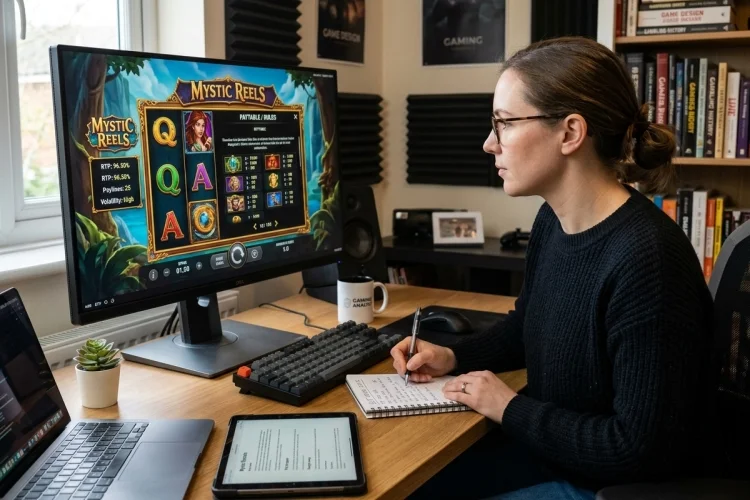
To accurately find the RTP of an online slot, you need more than a quick internet search. You must identify the active game version, check the player-facing rules, and understand whether jackpots or bonus features are included in the displayed percentage.

Begin With the Active Game

Open the exact slot you plan to examine and access its information section. Do this before depositing or placing a wager.

The rules should state the game’s theoretical return or provide another clear measurement of the chance of winning. Under UK remote-gambling standards, this information must be available before the customer commits to play.

Write down the percentage exactly as displayed. Include any decimal places because 96.00% and 96.50% are not the same mathematical configuration.

Record the Game and Version Details

The rules may display the developer’s name, game identifier, release number, build number, or certificate code. These details can help distinguish between similar versions.

Take note of whether you are using the desktop, mobile, real-money, or demonstration edition. The interface may also vary between regulated jurisdictions.

A slot with the same title and artwork can have different approved mathematical models. Comparing percentages without checking the version can therefore produce misleading conclusions.

Compare the Casino and Provider Information

Visit the developer’s official product page and compare its RTP with the percentage shown inside the casino game.

When the numbers match, you have useful supporting confirmation. When they differ, treat the figure displayed in the active player-facing rules as more relevant to the version being offered.

Do not assume that a provider’s highest listed percentage is automatically available everywhere. Marketing pages and game reviews may describe the original or default model rather than the operator’s selected configuration.

Check Whether the Jackpot Is Included

Progressive slots can display RTP in more than one way. The percentage may combine the base game and jackpot contribution, or it may list them separately.

For example, the rules could show:

Base-game RTP: 94.5%
Progressive-jackpot contribution: 1%
Combined theoretical RTP: 95.5%

British technical standards allow jackpot RTP to be displayed as one combined figure or as separate base-game and progressive components. The rules must also clarify when a player or stake level is not eligible for the jackpot.

Look for Stake-Dependent Returns

Certain games may offer different returns depending on the selected bet, feature, or jackpot eligibility. The highest advertised RTP may apply only when all qualifying conditions are met.

Read whether changing the stake affects paylines, bonus access, or progressive eligibility. Do not assume that every betting level uses the same mathematical return.

When several percentages are listed, identify the figure connected to the stake and playing method you would actually use.

Understand Independent RTP Testing

Regulated online slots may undergo mathematical analysis before release. Testing laboratories evaluate paytables, game logic, bonus contributions, jackpots, and large simulations to verify the expected return.

Gaming Laboratories International explains that RTP may be calculated through theoretical analysis or simulation, depending on the game. eCOGRA similarly uses large samples to test whether the designed percentage is achievable.

Testing verifies the mathematical model. It does not guarantee that an individual player will experience the stated percentage.

Compare RTP Without Overestimating It

A 96% slot has an implied theoretical house edge of 4%, while a 94% slot has an edge of 6%.

The calculation is:

House Edge = 100% − RTP

The two-point difference matters over substantial turnover, but random variation may dominate a short session. Either game can produce a large prize or consume the entire planned budget.

RTP should therefore be combined with information about volatility, stake size, and bonus distribution.

To verify a slot’s percentage correctly, start with the active game rather than a general review.

Record its exact figure and version details, compare them with the provider’s official information, and check whether jackpot contributions or betting conditions affect the result.

When different websites publish different numbers, they may be describing separate mathematical configurations. The percentage inside the player-facing rules is usually the most relevant figure for that specific game.

Use it as a comparison tool, not a promise of personal returns. Before playing, understand the paytable, calculate the cost per round, and establish strict time and money limits.

What Is a Slot Machine? From Mechanical Reels to Digital Play

What Is a Slot Machine? From Mechanical Reels to Digital Play

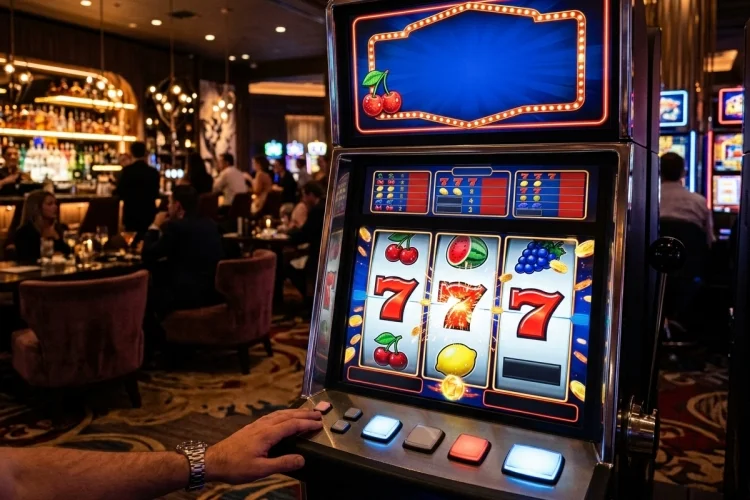
Today’s slot games can contain cinematic graphics, animated characters, interactive bonuses, and thousands of possible winning combinations. However, the earliest machines were simple mechanical devices operated with coins, springs, gears, and a lever.

To understand what is a slot machine, it helps to look at how the technology has changed. The classic three-reel design established a basic formula: place a bet, start the reels, wait for them to stop, and receive a prize when the symbols form an eligible pattern.

That formula remains familiar more than a century later. What has changed is how results are generated, how prizes are delivered, and how much information can appear on the screen.

The Origins of the Three-Reel Machine

Charles Fey is widely associated with the development of the modern three-reel slot machine in San Francisco during the late nineteenth century.

California’s historical landmark record credits Fey with inventing a coin-operated three-reel machine in 1895. The San Francisco International Airport Museum dates his famous Liberty Bell machine to 1898 and describes it as the first automatic-payout three-reel design.

The machine used a small selection of symbols, including bells, horseshoes, and card-suit designs. Its automatic payout system helped establish the format followed by many later machines.

How Mechanical Slots Operated

Mechanical slots depended on physical components. Inserting a coin and pulling the lever released the reels, allowing them to rotate before braking mechanisms brought them to a stop.

Symbols were printed around each reel. When the reels stopped, the symbols visible through the machine’s window created the final combination.

If that combination appeared in the payout schedule, the machine released coins or another prize. The physical arrangement of symbols and stopping positions determined the available outcomes.

The Move Toward Electronic Controls

Manufacturers gradually introduced electrical components, motors, processors, and electronic credit systems. Physical reels could remain on the machine even when a computer controlled how they moved.

One documented electronic reel design uses a central processing unit to determine a random game outcome. Motors and controllers then rotate the symbol-bearing reels and stop them at positions selected by the processor.

This separation between the calculated result and the reel animation became an important part of modern slot technology.

Video Slots Removed Physical Reels

Video slots replaced mechanical reels with digital images displayed on a screen. This allowed developers to create larger grids, animated symbols, expanding reels, and more complicated payout patterns.

The reels may still appear to spin, but the screen is presenting a software-generated result. There may be no physical wheel behind the display.

Online and mobile slots take this idea further. The entire game-including its reels, controls, sounds, balance, and paytable-exists within software running on a remote system or digital device.

RNG Software Determines Digital Results

Most digital slots use a Random Number Generator. The RNG produces numerical values that are converted into game outcomes according to the slot’s programmed rules.

Acceptable RNG results should be unpredictable and capable of passing recognised statistical tests. Game rules, payout tables, and outcome probabilities should not be secretly changed while the game remains available for gambling.

Independent testing laboratories can examine RNG output, game functionality, and whether calculated RTP figures match the underlying mathematical model.

Bonus Rounds Changed the Experience

Digital technology allowed slots to move beyond simple symbol matching. Modern games can include free spins, cascading reels, expanding wilds, multipliers, prize wheels, and separate bonus screens.

These features may feel like extra games, but their potential returns are generally included in the overall mathematical design. Triggering a bonus does not guarantee that its prize will exceed the money previously spent.

The rules should explain how each feature is activated and how its rewards are calculated. A visually impressive bonus can still produce a relatively small payout.

Progressive Jackpots Connect Prize Pools

A progressive jackpot increases as qualifying wagers contribute to a shared prize pool. It may connect machines in one venue or games across a wider online network.

Jackpot rules should explain how the prize is funded, whether a maximum or starting value applies, and what conditions make a player eligible.

Not every stake level necessarily qualifies for the largest jackpot. Players therefore need to read the conditions rather than relying only on the headline prize.

The slot machine has evolved from a mechanical device with physical reels into a sophisticated digital game controlled by software. Levers and coin hoppers have largely been replaced by buttons, touchscreens, electronic credits, and online accounts.

Yet the central idea remains unchanged: a player places a wager and receives a chance-based result. Modern graphics and bonuses can make the experience more elaborate, but they do not remove the risk of losing money.

Explore the paytable before playing, check jackpot requirements carefully, and use only an affordable entertainment budget. The history may be fascinating, but every current spin should still be approached cautiously.

How to Play Online Slots and Choose Your First Game

How to Play Online Slots and Choose Your First Game

Opening a slot lobby for the first time can be overwhelming. Hundreds of games may be available, with themes ranging from ancient history and fantasy to television shows, fruit machines, and progressive jackpots.

The colourful artwork is entertaining, but it should not be the only factor influencing your choice. Learning how to play online slots also means understanding the information hidden behind the game’s design.

Before pressing spin, examine the betting range, payout system, volatility, Return to Player percentage, and bonus rules.

These details cannot predict whether you will win, but they can help you choose a game whose cost and structure are easier to understand. Here is what first-time players should compare.

Choose a Simple Reel Format

A basic three-reel or five-reel slot is often easier to understand than a game filled with changing reel layouts and multiple bonus systems.

Look for a title with clearly displayed symbols and straightforward winning rules. Simple does not mean the game is more likely to pay; it only means the mechanics may be easier to follow.

A complicated interface can make it difficult to understand the total stake or identify what caused a payout. Beginners benefit from clarity more than flashy animation.

Compare Paylines and Ways to Win

A payline is a pattern across the reels where matching symbols may create a prize. Older-style slots might offer a few fixed lines, while modern titles can include dozens of lines or thousands of winning ways.

More paylines do not automatically create better value. They may simply produce more possible combinations while the game adjusts symbol probabilities and prize amounts accordingly.

Check whether all paylines are active automatically. Also confirm whether the displayed stake applies to each line or to the entire spin.

Review the Minimum and Maximum Bet

Every slot has a betting range. A game that supports very high stakes may still offer a low minimum, but the controls can sometimes make accidental increases easy.

Before spinning, identify the minus and plus buttons, betting level, coin value, and total bet display. Change one setting at a time and observe how the total cost responds.

Suppose you plan to spend no more than $10. At $0.20 per round, that amount covers 50 spins before any returned prizes. At $1 per round, it covers only ten. This simple calculation shows why stake size matters.

Understand the RTP Percentage

Return to Player, or RTP, represents the theoretical proportion of total stakes that a game is designed to return as prizes over a very large number of rounds.

A game with 96% RTP does not promise to return $96 after an individual spends $100. The percentage is a long-term statistical average, and short sessions can finish far above or below it.

RTP may be available inside the paytable or help menu. Some games also offer different RTP configurations, making it important to check the version being played.

Consider the Game’s Volatility

Volatility describes the general pattern in which prizes may be distributed. Low-volatility games tend to offer smaller payouts more regularly, while high-volatility games may produce longer dry periods and occasional larger prizes.

Neither option guarantees a better financial result. The distinction mainly helps explain how quickly a balance might fluctuate.

A first-time player may find a lower-volatility demo easier to observe. However, even a game described as low volatility can produce a sequence of losing rounds.

Examine Bonus Features Carefully

Free spins, wild symbols, multipliers, cascading reels, and pick-and-win rounds can make a slot more engaging. They also add rules that beginners need to understand.

Open the paytable and check exactly how a feature is activated. Some bonuses require three scatter symbols, while others depend on special meters or randomly triggered events.

Remember that “free spins” are normally part of the game’s mathematical design. They do not remove the cost or risk associated with the paid spins used to reach them.

Ignore Myths About Hot and Cold Games

A slot that has not paid recently is not necessarily preparing to release a large prize. Similarly, a game that just produced a jackpot does not automatically become less likely to pay on the next round.

RNG technology is designed to produce unpredictable outcomes. Independent testing may assess both the randomness of results and whether the theoretical RTP can be achieved through large simulations.

Choose games according to understandable rules and affordable stakes, not claims about “hot” machines or guaranteed winning times.

Choosing a first slot should be based on clarity rather than promises of easy prizes. Look for simple reels, understandable paylines, a visible total stake, and clearly explained bonus features.

RTP and volatility provide useful information about the mathematical design, but neither predicts your personal result. Try the game in demo mode before spending anything and calculate how many rounds your planned budget can cover.

Never interpret a losing streak as a reason to increase the bet. Select a game that you can understand, establish firm limits, and stop immediately when playing is no longer relaxed or enjoyable.