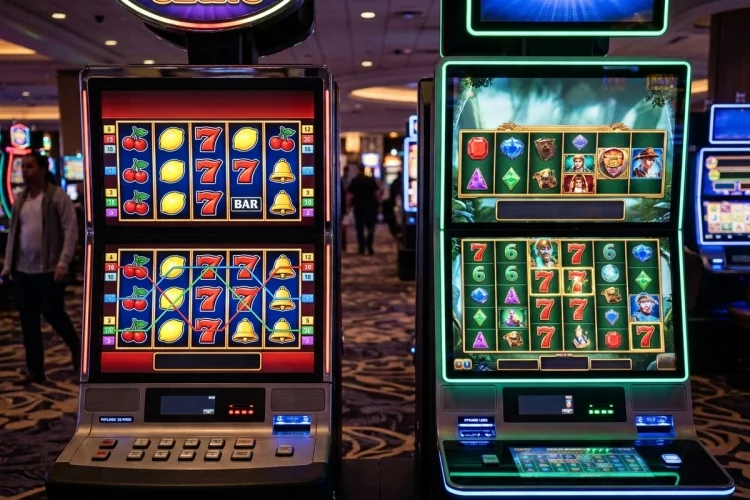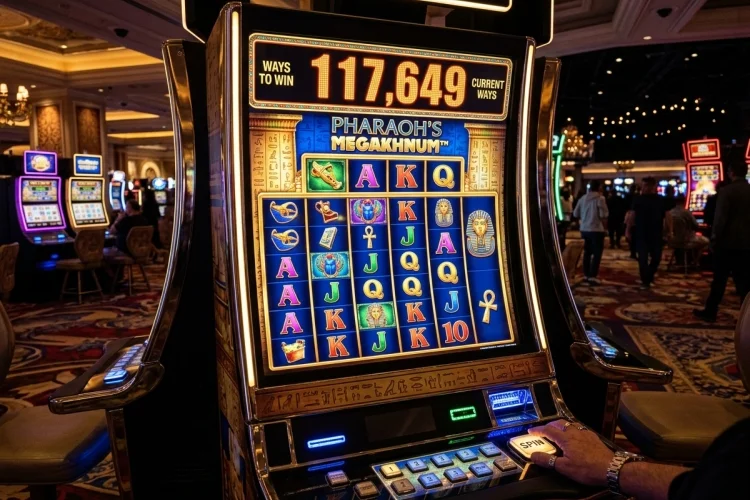

A Megaways slot can look completely different from one spin to the next. One moment a reel might contain only a few visible symbols; on the next spin, it can stretch much taller and create thousands of additional ways to form combinations.
That changing layout is one of the defining features of Megaways Games. Rather than using a fixed number of symbols on every reel, Dynamic Symbol Counts allow the reel heights—and therefore the number of available winning paths—to vary between outcomes. Evolution describes Megaways as a mechanic that changes how many symbols appear on the reels on each spin, creating more potential ways to win than a conventional fixed-layout slot.
The interesting question is whether more visible symbols actually increase hit frequency. The short answer is: they can influence it, but the relationship is not as simple as “more symbols equals more wins.”
Dynamic Symbol Counts Change the Size of the Grid
Traditional slots generally present a fixed visible structure. A five-reel game with three rows continues showing the same 15 positions regardless of the outcome.
Megaways changes that geometry dynamically.
Many classic implementations allow different numbers of symbols to appear on individual reels, with configurations capable of producing up to 117,649 ways. Big Time Gaming continues to use that maximum in current titles such as Max Megaways.
For example, consider six reels with these heights:
3 × 4 × 2 × 5 × 3 × 4
That configuration provides:
1,440 positional ways
Now imagine the next spin displays:
6 × 7 × 5 × 6 × 7 × 5
The number jumps to:
44,100 ways
The second spin contains significantly more potential symbol connections, but it has not automatically become a winning spin.
More Positions Increase Symbol-Matching Opportunities
Reel height matters because additional positions provide more places where a particular symbol can appear.
Consider a simplified theoretical example where one symbol has an independent 10% chance of occupying any visible position.
If a reel shows two positions, the probability of seeing at least one copy would be approximately:
1 − (0.9²) = 19%
If the same reel displays seven positions:
1 − (0.9⁷) ≈ 52.2%
In this simplified model, increasing the symbol count clearly improves the chance that the target symbol appears somewhere on that reel.
Commercial slot mathematics can be considerably more complicated. Symbol probabilities can depend on reel strips, weighting, game states, wild mechanics, and other rules, so the simple calculation above should not be treated as the actual probability of a specific game.
Regulatory requirements instead expect RNG outputs to be mapped to game outcomes according to the defined probabilities and paytables.
Hit Frequency Is Not the Same as Number of Ways
This distinction is essential.
Hit frequency generally refers to how often a wager produces a winning result. Ways-to-win describes how many positional routes are available for creating qualifying combinations.
Those numbers are related, but they are not interchangeable.
Imagine a spin offering 40,000 ways but containing mostly symbols that do not connect across consecutive reels. It can still return nothing.
Another spin might offer only 2,000 ways but happen to contain several copies of the same symbol on the first four reels, producing multiple winning combinations.
So when analysing Megaways Games, the visible Megaways count provides information about the current combinatorial space—not the exact probablity that the spin will pay.
Matching Symbols Can Multiply Very Quickly
Dynamic heights become more interesting when several matching symbols appear on the same reels.
Suppose one paying symbol appears:
- twice on Reel 1,
- three times on Reel 2,
- twice on Reel 3.
If that symbol pays from the first three consecutive reels, those placements can create:
2 × 3 × 2 = 12 winning combinations
Now imagine four copies appear on Reel 4.
The number of four-reel combinations becomes:
2 × 3 × 2 × 4 = 48
This multiplication explains why some visually crowded Megaways outcomes can generate many simultaneous wins.
The extra positions do not merely add one possible combination at a time. Multiple matching copies can combine with every qualifying copy on neighbouring reels.
That is where Dynamic Symbol Counts can have a meaningful effect on practical hit behaviour.
Symbol Distribution Still Controls the Real Odds
Reel height alone cannot determine hit frequency.
The frequency of individual symbols is equally important.
A low-paying symbol might appear frequently, while a premium symbol could be much less common. Therefore, seven visible positions might increase opportunities for common symbols considerably without producing the same increase for rare premium combinations.
RNG systems used for gambling are expected to produce outcomes that are appropriately random and mapped according to the game’s stated mathematical design. UK Gambling Commission rules also prohibit adaptive behaviour that changes outcome probabilities based on previous payouts or game intake.
This means the developer can balance the additional grid space with symbol distribtion, payouts, wild frequency, bonus probability, and other mathematical variables.
Two Megaways titles can therefore offer the same maximum number of ways while having very different hit frequencies.
Cascades Can Extend One Hit Into Several
Many Megaways Games add another layer through reactions or cascades.
When a winning combination occurs, participating symbols can disappear and new ones replace them. Current Big Time Gaming games such as Fireworks Megaways explicitly combine up to 117,649 ways with cascading reactions.
Now hit frequency becomes slightly more complicated to discuss.
A single paid spin can produce an initial win followed by several additional winning reactions. From the player’s perspective, this can feel like repeated hits, although mathematically they belong to one wager sequence.
Imagine an initial outcome creating a small three-reel win.
Those symbols disappear, fresh symbols arrive, and the new configuration creates another match. The second win triggers another cascade.
The starting wager has effectively opened a probability tree containing several potential follow-up states.
Dynamic reel heights can influence how many symbol positions participate throughout that sequence.
Features Can Deliberately Increase Reel Coverage
Some Megaways features directly modify the number of visible symbols.
Max Megaways, for example, includes an “Increased Ways” Free Spins option where at least five symbols appear on each reel. It also contains a Maximum Megaways base-game bonus that plays with seven symbols per reel.
This provides a useful real-world example of how developers can make reel geometry part of a feature.
More guaranteed positions create more combinatorial coverage. However, the feature’s actual return still depends on which symbols appear, how much they pay, how wilds behave, and whether reactions continue.
Likewise, Wheel of Fortune Megaways can increase reel heights during Free Spins through expansion symbols, eventually allowing considerably more ways than its base-game configuration.
That shows how reel height itself can become part of the bonus mathematics rather than simply a visual effect.
RTP and Hit Frequency Measure Different Things
Another common mistake is assuming a higher hit frequency must mean higher RTP.
It does not.
A game could produce small wins relatively often while still having the same theoretical return as another title that delivers fewer but larger wins.
RTP describes expected payout value over a very large amount of play. Hit frequency describes how often winning outcomes occur. Volatility concerns how that return is distributed.
A developer can therefore increase the frequency of small combinations while adjusting payouts or the occurence of larger wins so the intended theoretical return remains unchanged.
That is why players should avoid judging a Megaways game’s mathematical profile from its maximum number of ways alone.
In Megaways Games, Dynamic Symbol Counts influence hit frequency by changing reel coverage and creating more opportunities for matching symbols to connect. However, larger grids do not guarantee wins because symbol weighting, payouts, wilds, cascades, and feature rules remain crucial.
Look beyond the Megaways counter and examine the entire mathematical model to understand how often a game can realistically produce winning outcomes.