
Skip to content

Recent Posts

  • Push Gaming Slots: Features and Game Design Explained
  • Cluster Pays vs Cascading Reels: What Is the Difference?
  • iPhone Slots Guide: Safari, Apps and Compatibility Explained
  • Best Types of Free Slots for Learning the Basics
  • What Happens After a Progressive Jackpot Is Won? A Simple Guide

Most Used Categories

  • Jackpot Slots (5)
  • Free Slots (5)
  • Slot Guides (4)
  • Mobile Slots (4)
  • Megaways Slots (4)
  • Slot Providers (3)
  • Slot Features (3)
  • Slot Reviews (3)
  • Slot Themes (3)
  • High-RTP Slots (2)
Skip to content
YukonBlondeStream.com

YukonBlondeStream.com

Subscribe
  • Free Slots
  • High-RTP
  • Jackpot Slots
  • Megaways Slots
  • Mobile Slots
  • Slot Guides

Home › Grid Slots

Tag: Grid Slots

Cluster Pays vs Cascading Reels: What Is the Difference?

Cluster Pays vs Cascading Reels: What Is the Difference?

Javier Domínguez09/15/202609/19/2026

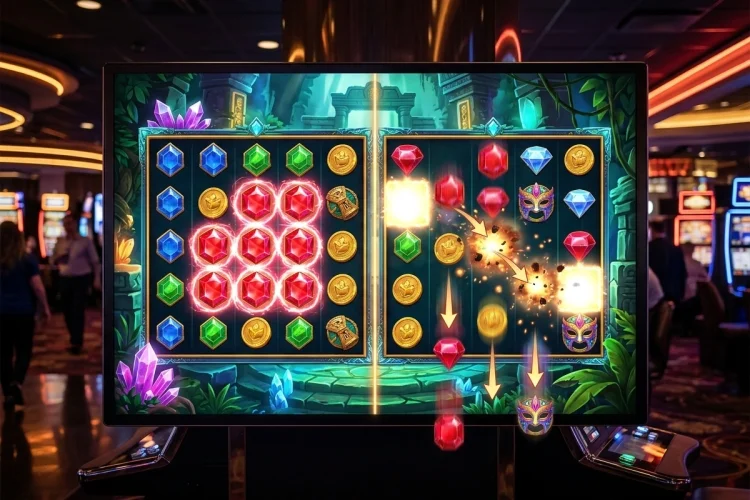
Modern slot games do not always rely on traditional paylines. Some ask you to build groups of matching symbols, while others remove winning icons and drop fresh ones into the empty spaces.

Because these features often appear together, it is easy to assume they are the same thing. The Cluster Pays vs Cascading Reels comparison is actually straightforward.

Cluster Pays describes how a winning combination is formed, while Cascading Reels describes what happens after certain wins occur. A slot can use one without the other, or combine both to create repeated reactions from a single paid spin.

What Is Cluster Pays?

Cluster Pays is a winning system based on groups of matching symbols.

Instead of matching symbols across a fixed horizontal or diagonal line, you normally need several identical symbols touching one another on a grid.

Horizontal and vertical connections are the most common rules.

Evolution’s Funk Master, for example, uses NetEnt’s Cluster Pays mechanic. Five or more matching symbols connected horizontally or vertically form a winning cluster.

This changes how you read the screen.

In a traditional payline slot, you tend to scan from left to right.

In a cluster game, you look across the entire grid for connected groups.

Imagine five matching fruit symbols forming an L shape. If the rules count horizontal and vertical connections, that irregular shape may still qualify as one cluster.

The precise minimum cluster size varies from game to game.

What Are Cascading Reels?

Cascading Reels are different because they are not primarily a payout pattern.

They describe a sequence that happens after a qualifying win.

Once a winning combination is paid, the symbols involved are removed. Symbols above them fall into the empty spaces, and new icons enter the grid.

If another winning combination appears, another cascade can begin.

NetEnt calls its version Avalanche. In Gonzo’s Quest, winning symbols on paylines disappear and are replaced by new symbols falling into their positions.

Other developers use names such as tumble, reaction, cascade, or drop.

The terminology changes, but the basic idea is similar.

One paid spin can potentially generate several sequential results before no new win remains.

The Biggest Difference Is Win Formation vs Win Continuation

This is the easiest way to remember the distinction.

Cluster Pays tells the game what counts as a win.

Cascading Reels tell the game what happens after that win.

Suppose a 7×7 grid requires five matching symbols to touch.

That is the Cluster Pays rule.

Now suppose those five symbols disappear after payout and new symbols fall into their spaces.

That is the cascading rule.

They are seperate systems even though they interact closely.

This distinction is important because many modern slots package both mechanics together, making them appear like one feature.

Once you separate them mentally, the paytable becomes much easier to understand.

Cluster Pays Can Work With Cascades

Sugar Rush is a clear example of the two mechanics working together.

Pragmatic Play describes the game as using a 7×7 grid where five or more matching symbols connected horizontally or vertically create a winning cluster. Those winning symbols then disappear through the tumble feature, allowing new symbols to fall into place.

Sugar Rush 1000 follows the same basic structure while adding stronger multiplier spots. Pragmatic Play specifically describes it as combining cluster pays with tumbling gameplay.

So one mechanic determines whether the cluster qualifies.

The second mechanic continues the action afterward.

This combination is popular because clusters can create irregular empty spaces across a large grid, giving replacement symbols many opportunities to form another group.

Cascading Reels Do Not Require Cluster Pays

This is where the difference becomes especially clear.

Gonzo’s Quest uses traditional paylines rather than Cluster Pays.

It has a five-reel, three-row layout with 20 paylines, yet it also uses the Avalanche cascading mechanic. Winning payline symbols disappear and new ones fall into their spaces.

Bonanza offers another example.

Big Time Gaming combines its Megaways system with Dual Reaction, a cascading reel feature. The game can create up to 117,649 ways to win, but its wins are not based on connected clusters.

That proves cascades are independent from Cluster Pays.

They can work with paylines, ways-to-win systems, Megaways, or grid-based cluster games.

The cascade simply needs a rule telling it which symbols should be removed after a win.

Cluster Pays Changes How You Read the Grid

Traditional slots train players to look for repeated symbols across reels.

Cluster games require a different visual habit.

Imagine a 7×7 board filled with candy symbols.

You may see three blue candies in one area and another two directly below them.

If all five are connected horizontally or vertically, they can form one cluster even though they do not sit on a straight line.

Cosmic Clusters uses a 6×6 grid where groups of five to fourteen matching symbols can create wins before triggering tumbles.

This structure makes the grid feel more like a puzzle board.

Diagonal symbols may look connected visually but often do not count unless the game rules specifically allow diagonal contact.

That is why reading the paytable is important before assuming how clusters form.

Cascades Can Create Multiple Wins From One Spin

The appeal of cascading mechanics is continuation.

A normal reel game may finish immediately after the reels stop and the payout is calculated.

A cascading game can continue changing after the initial result.

Suppose your first result produces a 4x payout.

The winning symbols disappear.

Replacement symbols create another 2x result.

Those symbols disappear too, followed by a third 5x combination.

The entire sequence began from one initial wager.

Some games also increase multipliers during those sequences.

Gonzo’s Quest, for example, increases its Avalanche multiplier as consecutive wins occur, up to the stated limits of the game.

That multiplier progression is an additional feature, not something every cascading slot automatically includes.

Cluster Games Often Use Large Grids

Cluster Pays tends to work naturally with larger grids.

A traditional 5×3 layout gives only fifteen symbol positions.

A 7×7 cluster grid contains forty-nine positions, giving connected symbols more room to form different shapes.

Pragmatic Play’s Candy Rush uses a 7×7 tumbling grid where clusters of five to fifteen or more matching symbols can create payouts.

Mining Rush also uses a 7×7 Cluster Pays format combined with tumbling wins.

However, grid size alone does not define Cluster Pays.

A game can use an unusual board shape or smaller layout as long as its payout rule is based on connected symbol groups.

Always check the actual mechanic rather than assuming any large grid must be a cluster game.

Cascades Can Interact With Wilds and Multipliers

Cascades often become the engine that powers additional mechanics.

A developer may add Wild symbols after each winning tumble, increase a multiplier, upgrade special symbols, or leave persistent modifiers behind.

Hot Pepper, for example, uses a 7×7 cluster grid where winning symbols disappear and new ones replace them. The game can also leave multiplier Wilds behind during tumbles.

Mystery Mice uses cluster wins and tumbles while special Power Wilds change as they participate in wins.

These features can make the cascade sequence much more important than the original result.

Still, remember that Wilds and multipliers are seperate mechanics again.

They are additions layered onto the cluster-and-cascade foundation.

Does One Mechanic Offer Better Odds?

Not automatically.

Cluster Pays does not guarantee more frequent wins simply because several symbols can connect in different shapes.

Cascading Reels also do not guarantee that every winning sequence will continue.

The game’s mathematical model determines symbol probability, RTP, volatility, payout values, bonus frequency, and maximum win.

Two cluster games can behave very differently.

Likewise, two cascading slots can have completely different risk profiles.

A busy screen with repeated explosions may feel more active, but visual activity should not be confused with better expected return.

Compare RTP and volatility seperately from the headline mechanic.

The core Cluster Pays vs Cascading Reels difference is simple: Cluster Pays determines how matching symbols form a winning group, while Cascading Reels remove winning symbols and replace them to create possible follow-up wins.

Many modern slots combine both, but neither mechanic requires the other. Check the paytable, cluster size, cascade rules, multipliers, and bonus features before playing.
What Is Megaclusters? How the Mechanic Works and Why It Feels Different

What Is Megaclusters? How the Mechanic Works and Why It Feels Different

Javier Domínguez09/03/202609/19/2026

Modern slot mechanics are no longer limited to fixed reels and straight paylines. Developers now use changing grids, cascading symbols, expanding positions, and unusual ways of forming winning combinations.

So, What Is Megaclusters and why does it look so different from Megaways? Megaclusters is a mechanic developed by Big Time Gaming that builds on cluster-style gameplay.

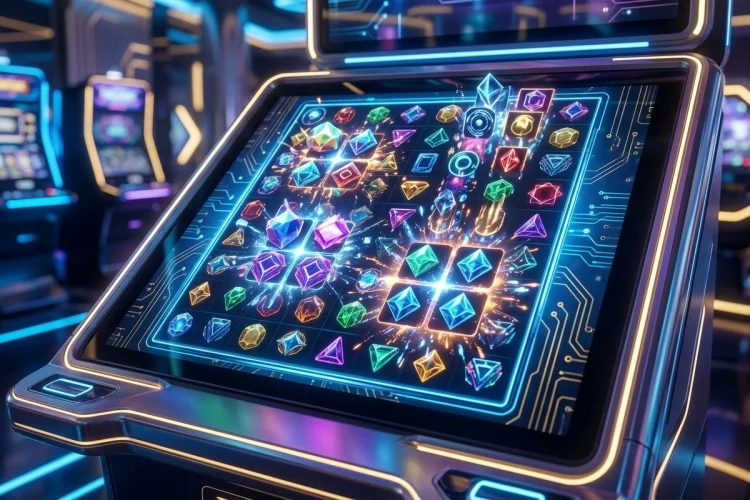
Instead of changing the number of symbols on individual reels, winning symbols can divide into smaller symbols, creating new opportunities for additional reactions. The result is a game board that can become much busier as a sequence develops.

What Is Megaclusters in Simple Terms?

Megaclusters is essentially an evolution of the cluster-pay slot format.

In a traditional cluster game, players usually need a group of matching symbols touching horizontally or vertically. When a qualifying group forms, the game pays according to its rules and may remove those symbols before new ones enter.

Megaclusters adds another layer. In Big Time Gaming’s Star Clusters, winning symbols can split into four smaller symbols. Those smaller pieces then participate in subsequent reactions, potentially creating additional winning clusters.

This means a single large symbol position can eventually contain several smaller symbols.

Instead of merely replacing a winning icon with another full-sized icon, the board can become increasingly detailed during a reaction sequence.

How the Symbol-Splitting Mechanic Works

The easiest way to understand Megaclusters is to imagine a square grid containing normal-sized symbols.

Suppose five matching symbols connect and form a qualifying cluster. Once that win is evaluated, the winning symbols may divide into four smaller symbols.

If those smaller symbols later form another winning cluster, they can continue participating in reactions while symbols collapse downward and new ones enter from above.

Star Clusters Megapays describes the system as winning symbols being replaced by four smaller symbols, followed by a collapse that creates new opportunities for combinations.

The exact implementation can vary from one title to another, so players should still read each game’s information screen.

That small variation is importent because not every Megaclusters release uses exactly the same grid size, Wild behaviour, or bonus structure.

Megaclusters Uses Clusters Instead of Traditional Paylines

One of the biggest differences from conventional slots is how winning combinations are formed.

Megaclusters games generally rely on connected groups rather than fixed paylines. For example, Star Clusters 2 requires five or more adjacent matching symbols to form a winning cluster.

That means you are not necessarily looking for identical symbols lined up from the leftmost reel.

Instead, you are watching for groups that connect across the grid.

This also changes how the screen feels visually. Traditional slots encourage players to follow horizontal or diagonal patterns, while cluster games encourage you to scan areas of the board.

For new players, this distinction is worth understanding before anything else.

Why the Grid Can Become Much Larger

Another key feature is board expansion.

The original Star Clusters begins with a 4×4 format, while its Megaclusters structure can create far more individual symbol positions as reactions develop.

Big Time Gaming explains that the mechanic can extend gameplay from a 4×4 structure to 8×8 and, in the original game’s free-spin configuration, as many as 256 symbols may appear through a 16×16 arrangement.

Newer versions can use different implementations.

Star Clusters 2, for example, begins with a 4×4 starfield and expands to an 8×8 grid during Free Spins. Winning symbols then split as reactions continue.

The key idea is not simply “more reels.”

It is that the symbol space itself can become more granular.

How Reactions Keep a Spin Moving

Reactions are central to Megaclusters gameplay.

After a cluster wins, participating symbols are removed, split, or rearranged according to the game’s rules. Remaining symbols collapse into empty spaces, while fresh symbols enter the grid.

If the replacement symbols immediately create another valid cluster, the game triggers another reaction.

This process can continue without requiring a new paid spin.

Cyberslot Megaclusters follows this general structure, with reactions dividing symbols and creating new opportunities while the game also adds specialised Wild mechanics.

These chained reactions are one reason Megaclusters can appear more chaotic than a standard reel slot.

A simple-looking initial board may change several times before the sequence finnaly ends.

What Role Do Wilds and Multipliers Play?

Megaclusters describes the underlying symbol and cluster system, but individual games can add extra features on top of it.

Wild symbols are a good example.

In Star Clusters, Gold Wilds can interact with multiplier mechanics. Cyberslot Megaclusters expands the idea with Gold and Rainbow Wild features, while later titles introduce their own variations.

Star Clusters 2 uses Gold Wilds with random multipliers from x2 to x100. When several Gold Wilds participate in the same winning cluster, their effects can combine according to the game’s stated rules.

These features should not be treated as universal Megaclusters rules.

They belong to individual games layered on top of the core mechanic.

How Megaclusters Differs From Megaways

Megaclusters and Megaways were both developed by Big Time Gaming, but they solve slot design in very different ways.

Megaways typically uses reel-based gameplay. The number of symbols visible on individual reels can vary from spin to spin, changing the number of possible winning ways.

Bonanza, one of BTG’s best-known Megaways titles, offers up to 117,649 ways to win through this changing-reel structure.

Megaclusters is grid based.

Instead of asking how many symbols appear on each reel, the mechanic focuses on connected symbols, splitting winners into smaller pieces, and triggering continued reactions.

So the simplest comparision is this: Megaways changes the reel configuration, while Megaclusters transforms the symbols and grid during cluster reactions.

Does Megaclusters Mean More Wins?

Not necessarily.

A mechanic that creates more symbol positions or more reactions does not guarantee a winning session. The game still follows its underlying mathematical model, including RTP, hit frequency, volatility, symbol weighting, and payout rules.

More positions simply create a different structure for generating possible combinations.

This distinction matters because visual activity can feel like increased winning probability even when the long-term game mathematics remain determined by the developer’s model.

Always read the paytable and game rules rather than judging risk from animations alone.

Understanding What Is Megaclusters becomes much easier once you focus on three ideas: connected clusters, symbol splitting, and chained reactions.

Unlike Megaways, which changes reel configurations and ways to win, Megaclusters transforms the grid itself as winning symbols divide.

Before playing any title, check its cluster requirements, Wild rules, and bonus mechanics so you know exactly how its version works.

Spotlight

  • Best Types of Free Slots for Learning the BasicsBest Types of Free Slots for Learning the Basics
  • What Happens After a Progressive Jackpot Is Won? A Simple GuideWhat Happens After a Progressive Jackpot Is Won? A Simple Guide
  • Virtual Credit Systems in Free Slot Modes: How Demo Balances WorkVirtual Credit Systems in Free Slot Modes: How Demo Balances Work
  • Progressive Jackpot Systems: How Seed Values Shape Every ResetProgressive Jackpot Systems: How Seed Values Shape Every Reset
Explore the technologies shaping modern life through clear, engaging coverage of gadgets, software, artificial intelligence, cybersecurity, mobile devices, apps, and digital innovation. Our technology content explains important developments, examines emerging trends, and provides practical insights that help readers better understand the tools, platforms, and ideas transforming the digital world today.
Find What You Need
See What’s Available
Check What’s Available
Explore What’s Available
Discover What’s Available
See How It Works
Learn How It Works
Discover How It Works
Find Out How
See How
Learn More About It
Find Out More About It
Discover More About It
Explore More About It
Read More About It
Get the Details
Get Full Details
Get the Full Story
View the Full Story
Discover the Full Story
Explore the Full Story
Find the Full Story
Learn More Now
Find Out Now
Read More Now
View More Now
See More Now
Get Started Now
Start Exploring
Start Discovering
Start Learning
Explore Here
Discover Here
Read It Here
See It Here
View It Here
Check It Here
Find It Here
Go Here
Visit Here
Click to Explore
Click to Discover
Click to Read More
Click to View
Click to See More
Click for Details
Click for More Information
Tap to Learn More
Tap to Explore
Tap to Discover
Take Me There
Show Me More
Tell Me More
Show Me the Details
See the Benefits
Discover the Benefits
Explore the Benefits
Find Out Why
See Why
Discover Why

Latest Updates

  • Push Gaming Slots: Features and Game Design ExplainedPush Gaming Slots: Features and Game Design Explained
  • Cluster Pays vs Cascading Reels: What Is the Difference?Cluster Pays vs Cascading Reels: What Is the Difference?
  • iPhone Slots Guide: Safari, Apps and Compatibility ExplainediPhone Slots Guide: Safari, Apps and Compatibility Explained
  • Best Types of Free Slots for Learning the BasicsBest Types of Free Slots for Learning the Basics
  • About Us
  • Contact
  • Disclaimer
  • Privacy Policy
  • Terms & Conditions
© 2026 YukonBlondeStream.com | Theme: BlockWP by Candid Themes.